
HoneyComb
Designed a streamlined platform for parent involvement in schools.
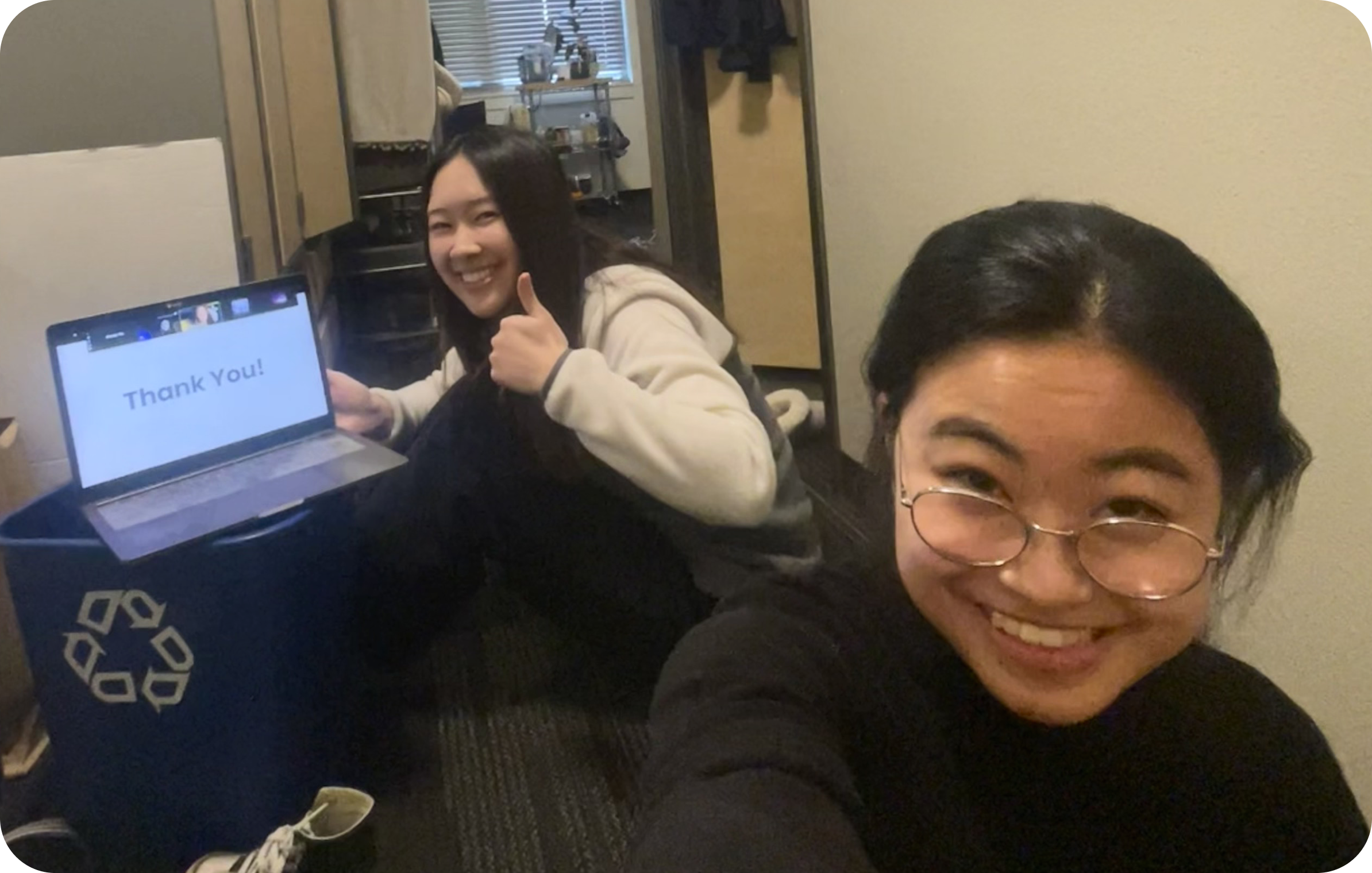
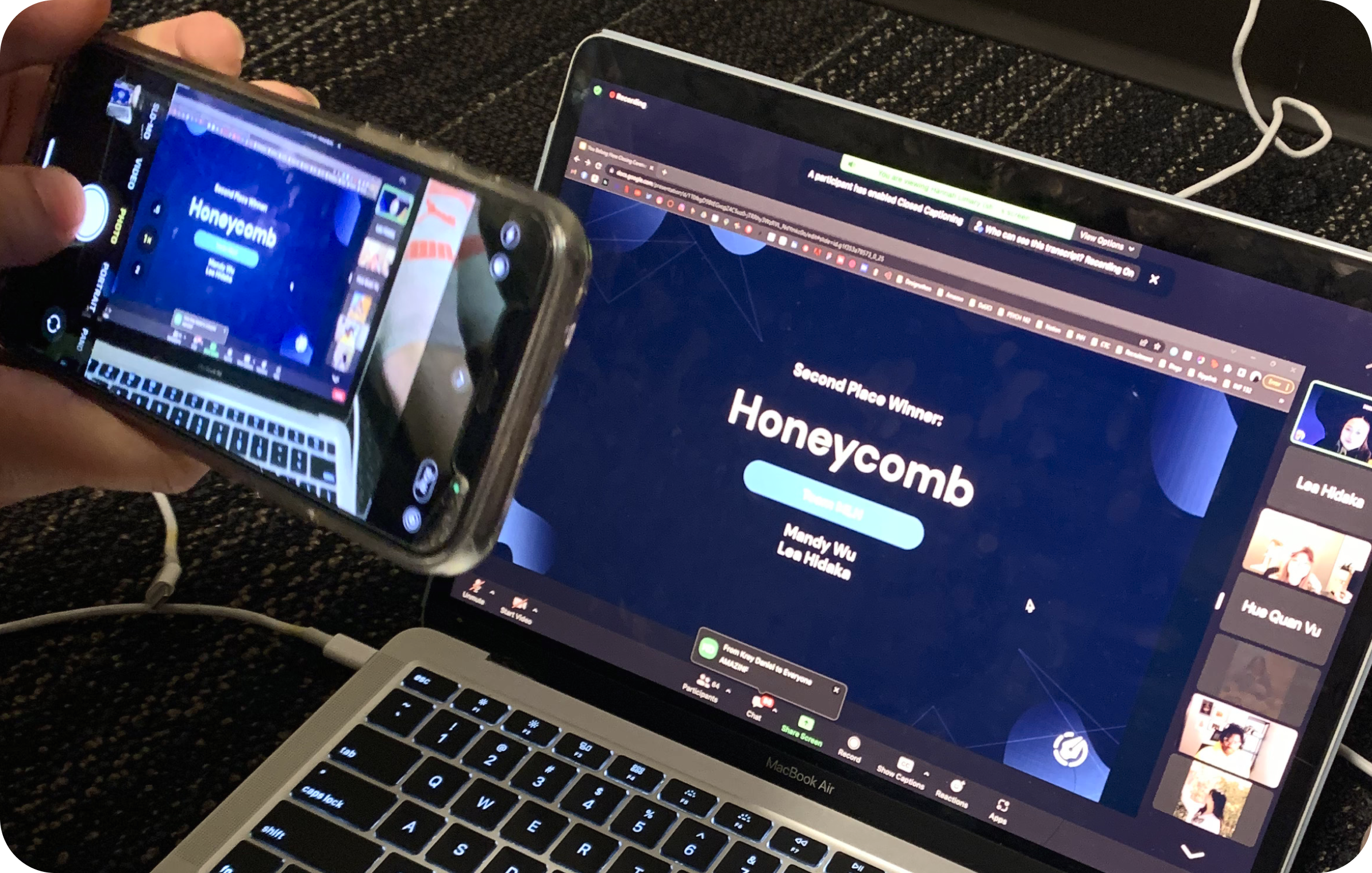
Honeycomb was created during Design@UCI's 2023 Design-a-thon, a 24-hour competition with 300+ qualifying participants inspired by the theme of Community and Inclusivity. Working alongside one other designer, I designed a mobile-first platform aimed at bridging the gap in parent-school engagement, empowering busy and underrepresented parents to stay informed, participate in school decisions, and build community.
Parents are underrepresented in school decision-making
Existing systems for parent-school communication are fragmented, inaccessible, and largely exclusive, leaving most parents disconnected from the decisions that affect their children.
A centralized platform that makes parent involvement accessible for everyone
HoneyComb brings together school updates, community initiatives, and direct action tools into one inclusive platform, so any parent can stay informed and engaged, regardless of their schedule or background.
Most parents have full-time jobs (and a bunch of other responsibilities, too)
After identifying the problem space, we leveraged existing quantitative research and conducted brief interviews to understand the real barriers parents face. The data made the scale clear: 96.5% of married-couple families have at least one employed parent, with rates even higher for single parents. For most families, participation isn't a matter of willingness. It's a matter of access.
“Who’s going to watch the kids while I’m at a school meeting?”
Our interviews included single parents, immigrant parents facing language barriers, and low-income families, giving us a grounded picture of who the existing systems were failing.
The PTA is not designed for the average parent
Traditionally, the only channel for parents to be informed and stay involved with their child’s education is through the Parent Teacher Associations (PTA). However, PTAs are not designed to be accessible for parents. They often exclude busy families due to inconvenient meetings, exclusive leadership, and scattered communication.
School districts lack resources to maintain updated comms
School districts often rely on outdated communication channels like flyers, robocalls, and fragmented apps, making it difficult for parents to know what’s actually happening in their children’s schools.
Parent involvement becomes network-driven
Parents who are already well-connected tend to stay informed through social networks, while those without those connections are left out. Involvement becomes a privilege, not a right.
How might we support underrepresented parents in their pursuit of school involvement to foster an inclusive education system?
Rapid ideation to explore potential solutions
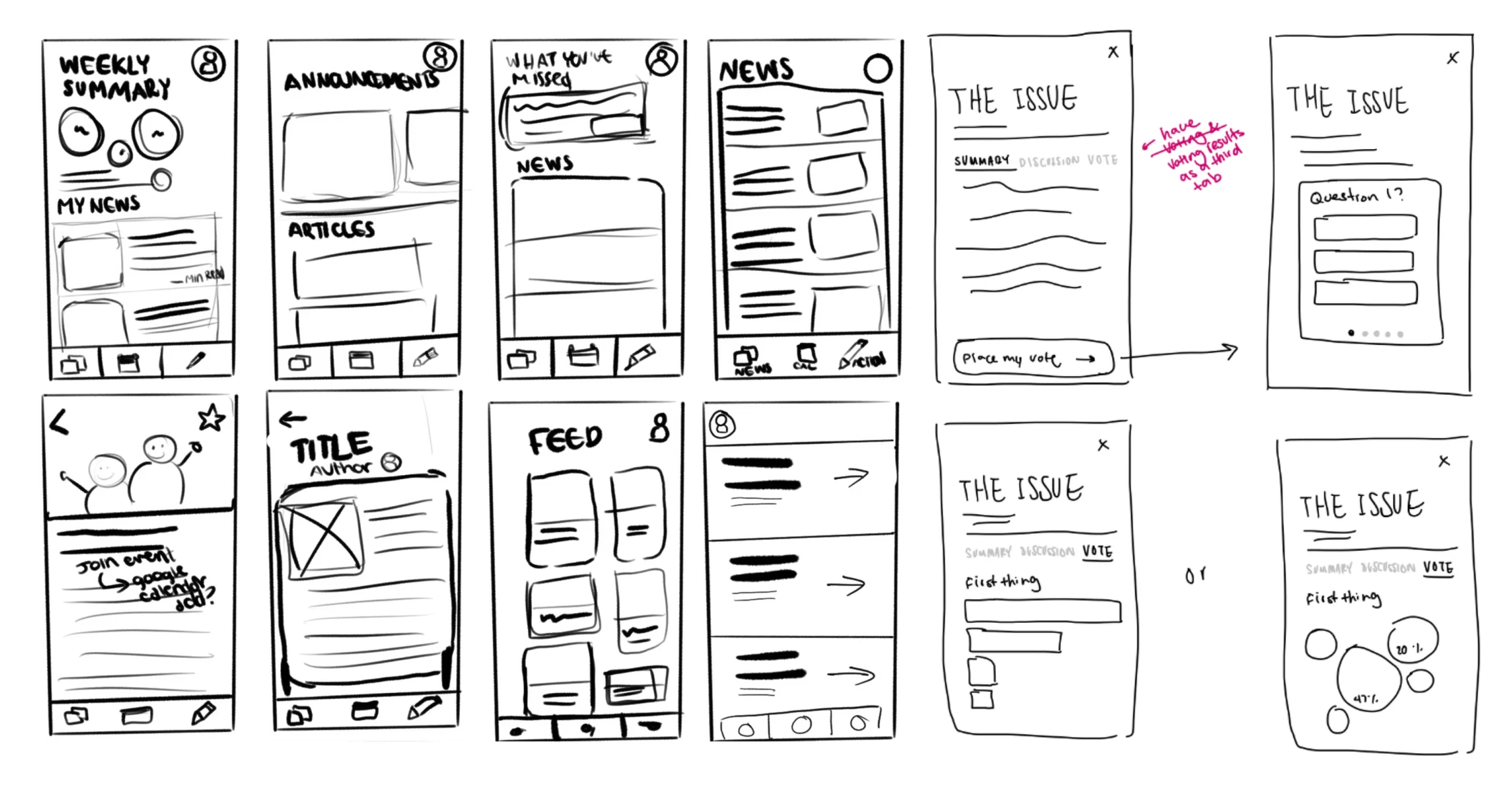
Quick sketches were used to brainstorm and refine Honeycomb's design concepts, exploring a range of structural and interaction ideas before narrowing down our approach.
Due to the time constraints of the design-a-thon, we skipped the typical iterative process of exploring multiple variations and user testing. Instead, we made assumptions based on initial insights and jumped directly to a high-fidelity prototype.
HoneyComb: Empowering all parents
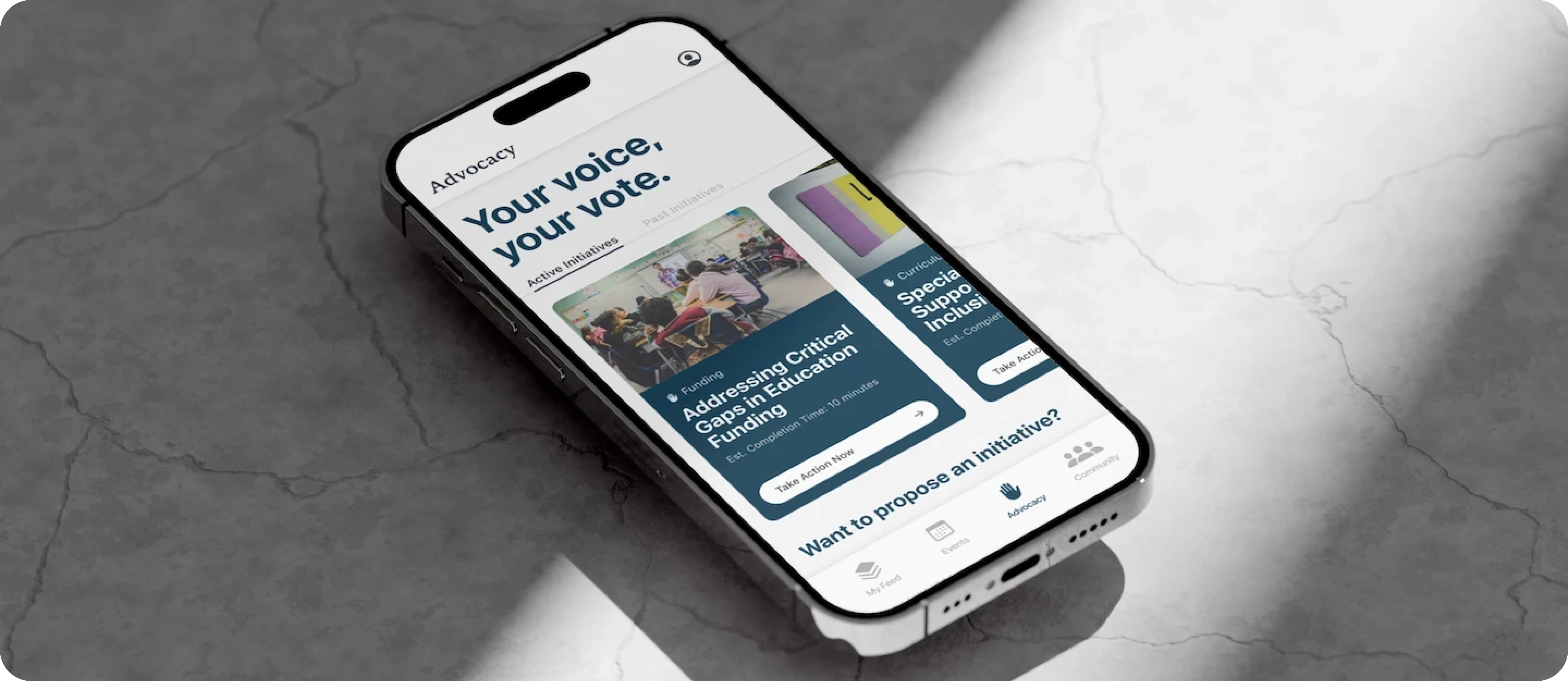
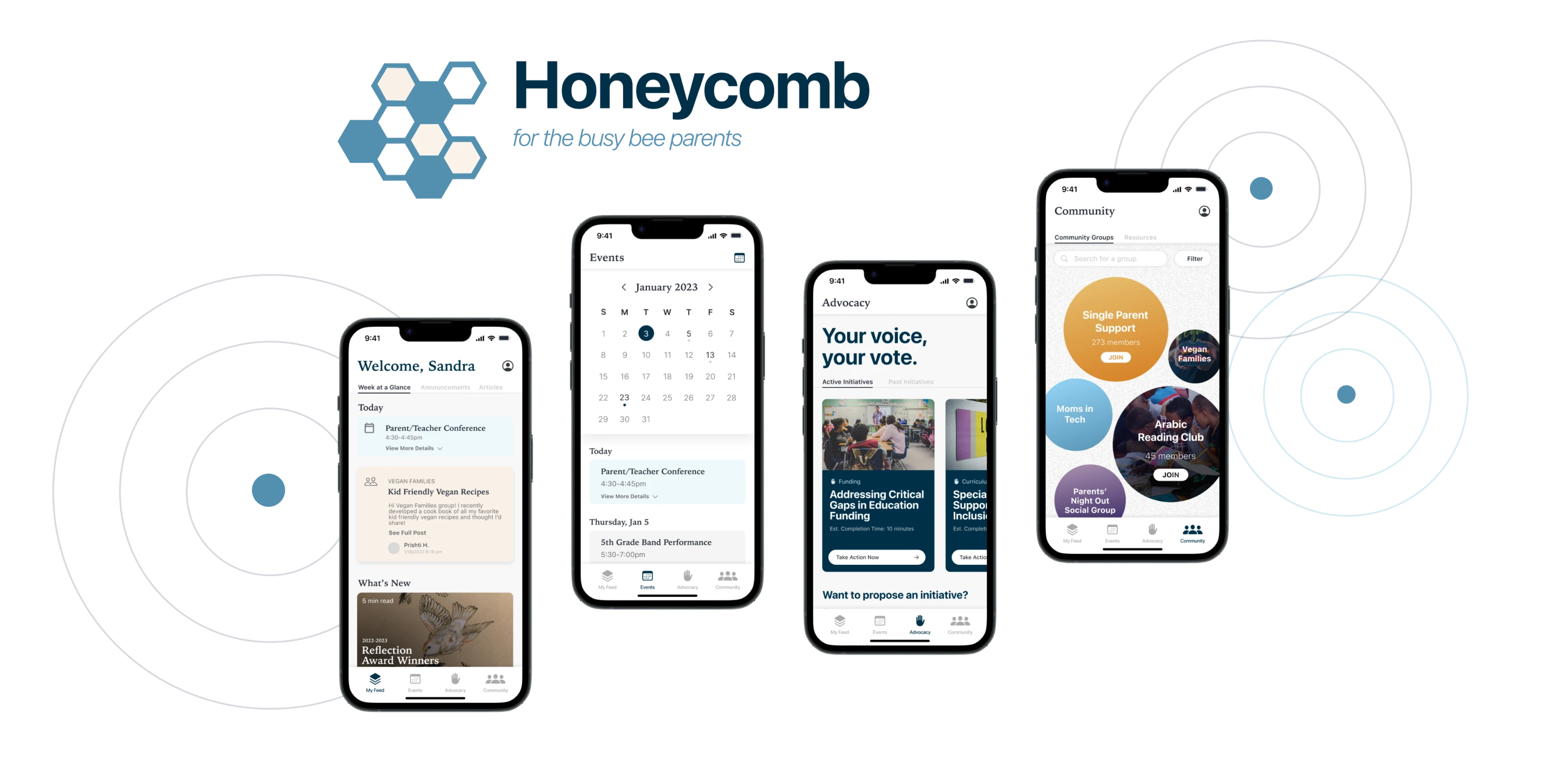
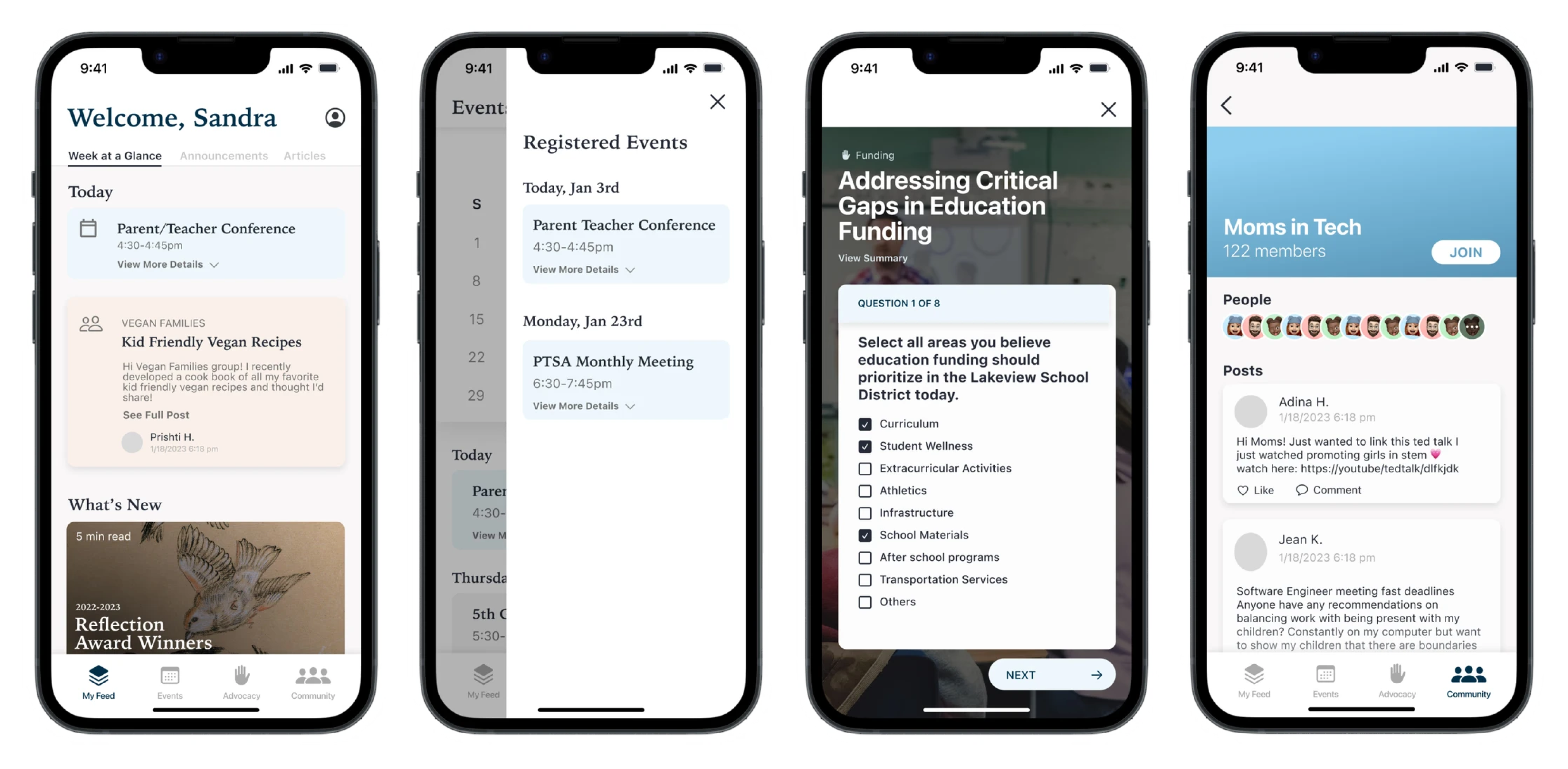
The final design directly addresses the barriers to parent involvement through four core features: My Feed, a personalized stream of school district updates; Events, a concise calendar for tracking what's happening; Advocacy, a voting tool for parents to weigh in on school initiatives; and Community, a space for families to connect. Together, they make meaningful participation accessible to any parent, regardless of schedule or background.
Research is the foundation, even under time pressure
Despite the 24-hour constraint, much of our success came from solid upfront research. By leveraging existing quantitative data and conducting brief interviews with our target users, we gathered insights that directly shaped our design decisions. Even in a sprint, the time spent understanding the problem paid off in every design choice that followed.
Storytelling is a design skill
In our final presentation, we used storytelling to build an emotional connection with the judges. By centering a persona that represented our target user, we painted a vivid picture of a busy parent’s daily reality and how HoneyComb fit into it. It reframed the design not as a set of features, but as a solution to someone’s real life.
Constraints can unlock your best work
The rush of a 24-hour deadline turned out to be one of the best creative conditions I’ve worked in. With no time to overthink, I leaned into instinct and iteration. I learned that tight constraints can sharpen your focus in ways that unlimited time rarely does.