Nora
Led 0-to-1 design for Nora's mobile and desktop interface, established the visual language, and drove marketing agendas.
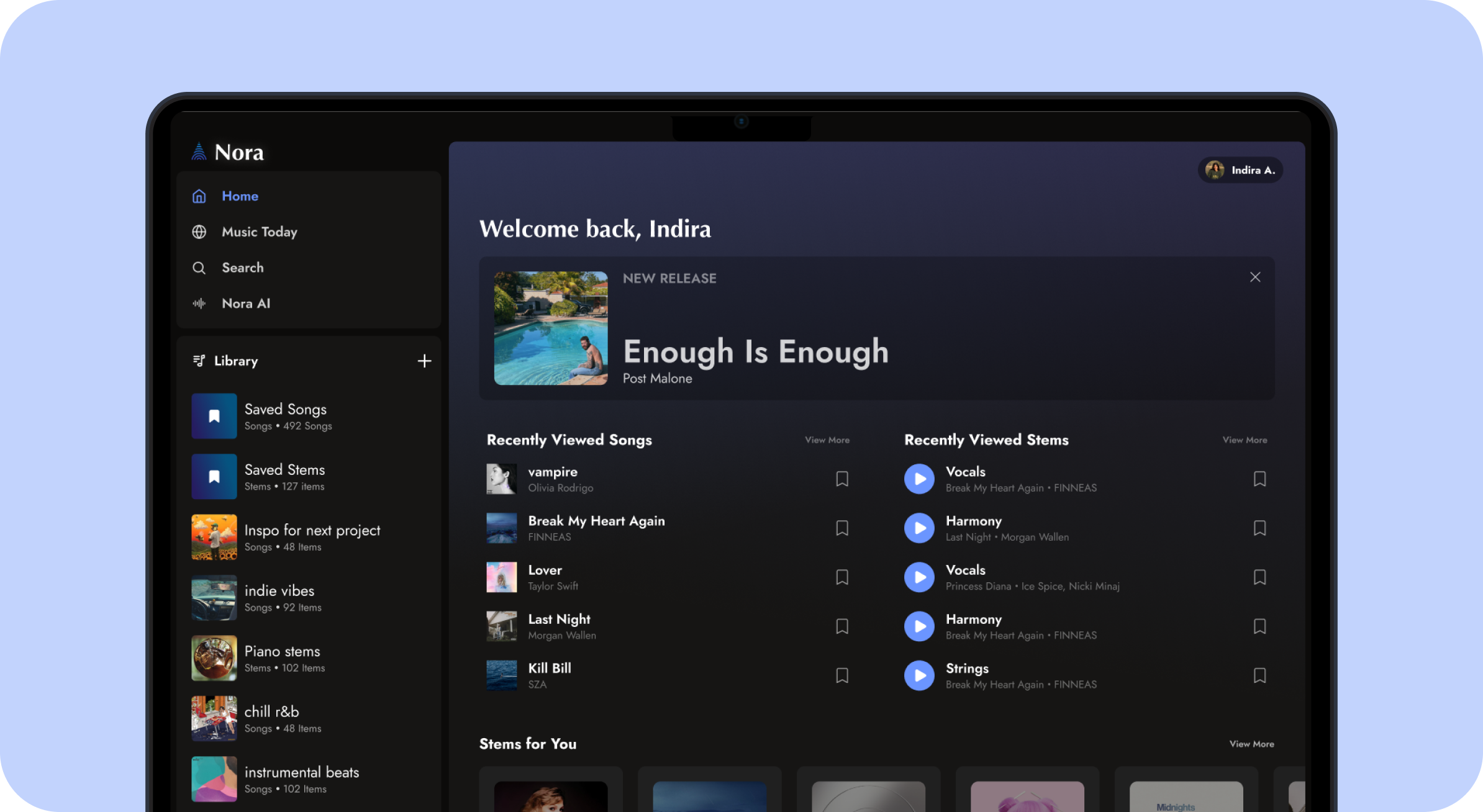
Founded by two USC students passionate about music production, Nora set out to solve a real pain point: musicians spend too much time hunting across scattered sources for accurate song information (credits, samples, chords) that should just exist in one place. I joined as lead designer after the initial branding direction was set, and from there built the design system, designed the end-to-end mobile and web experience, and created marketing material shared with investors and the public.
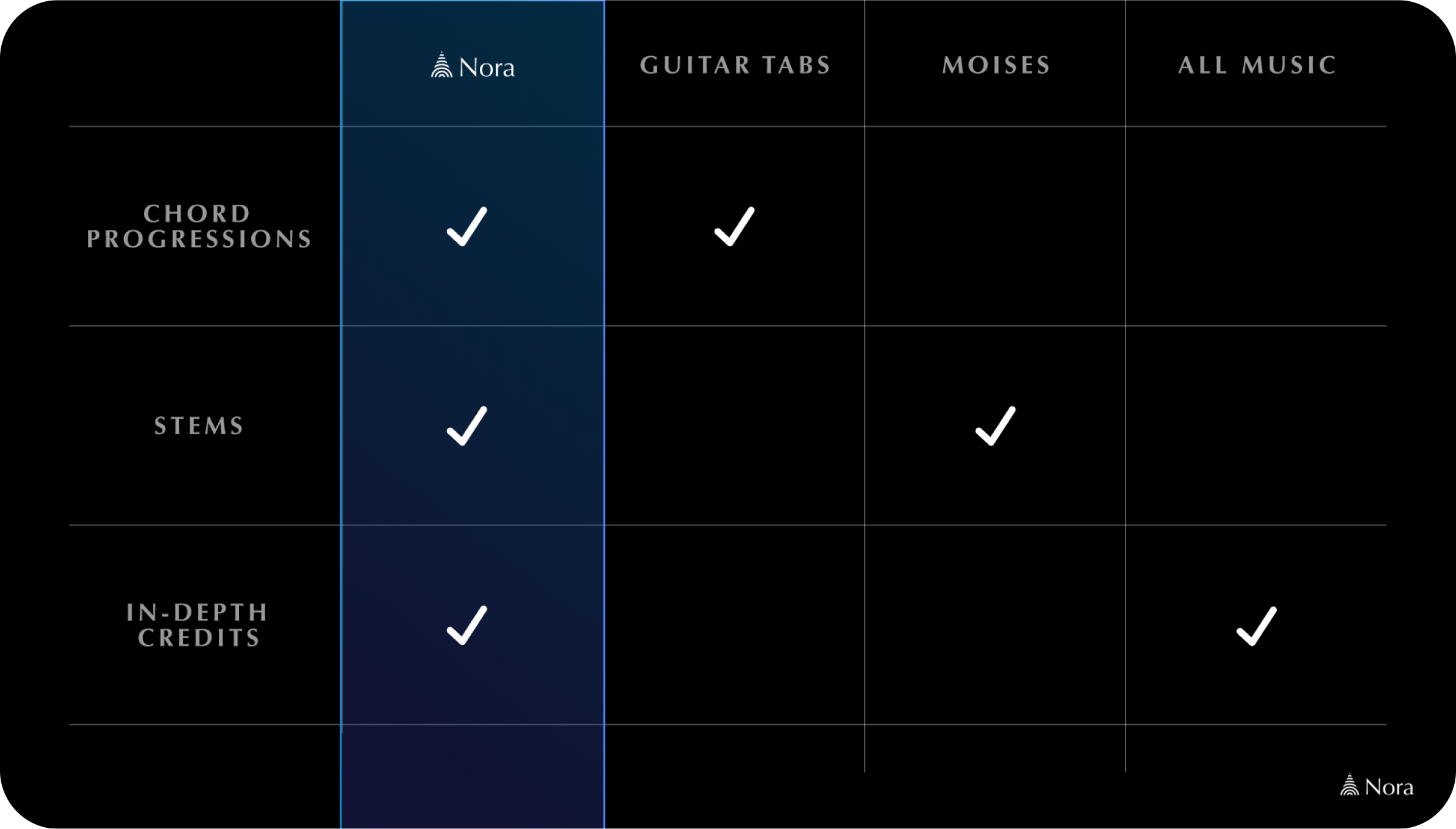
Product market research & competitive analysis
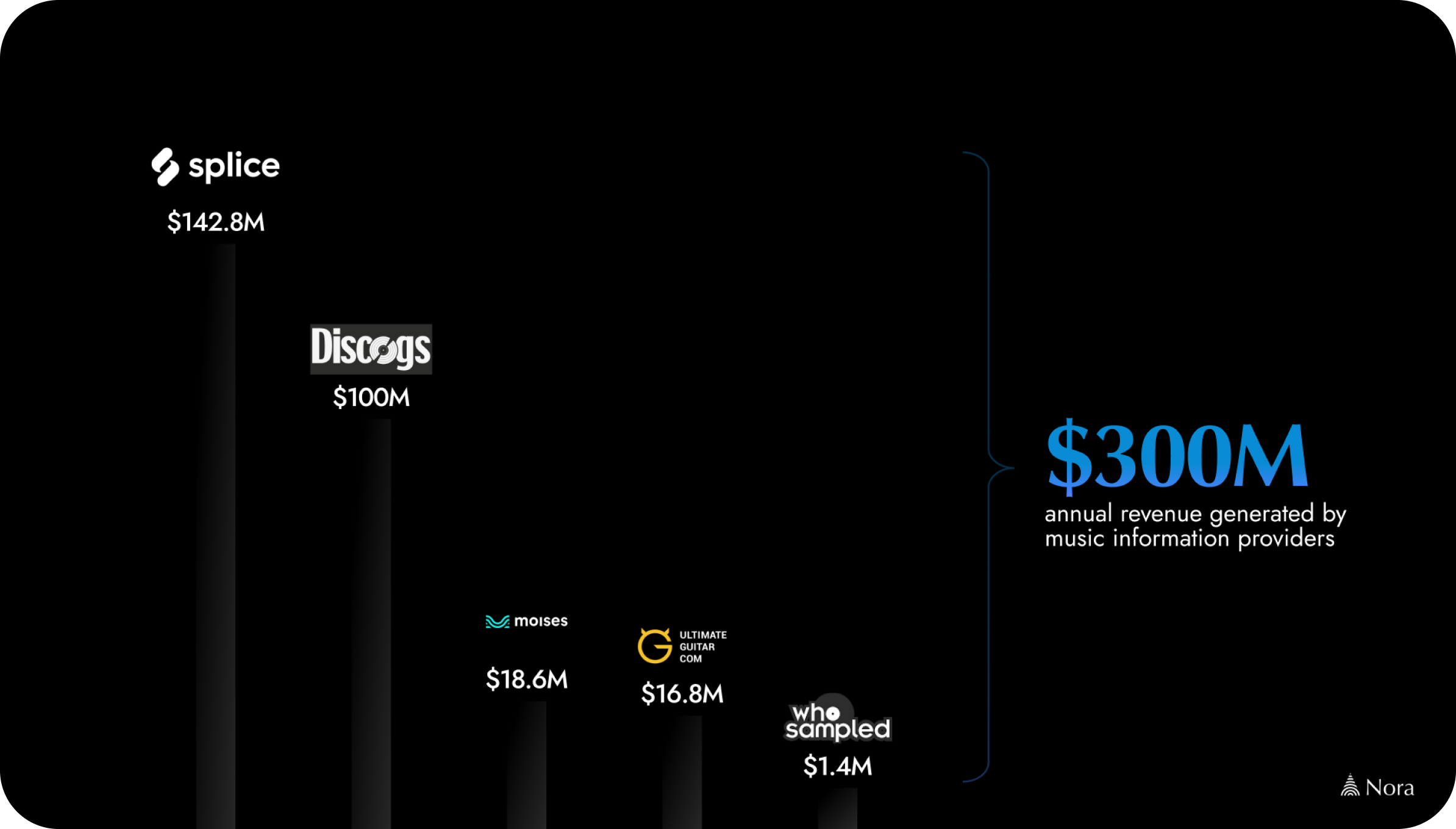
Before designing anything, I needed to understand the landscape. Nora's goal wasn't to compete with what already existed. It was to fill a gap those platforms left open. I audited existing music tools and services, synthesizing findings into competitive and market analyses that grounded our early product decisions in what musicians actually needed.
Developing & maintaining a mini design system
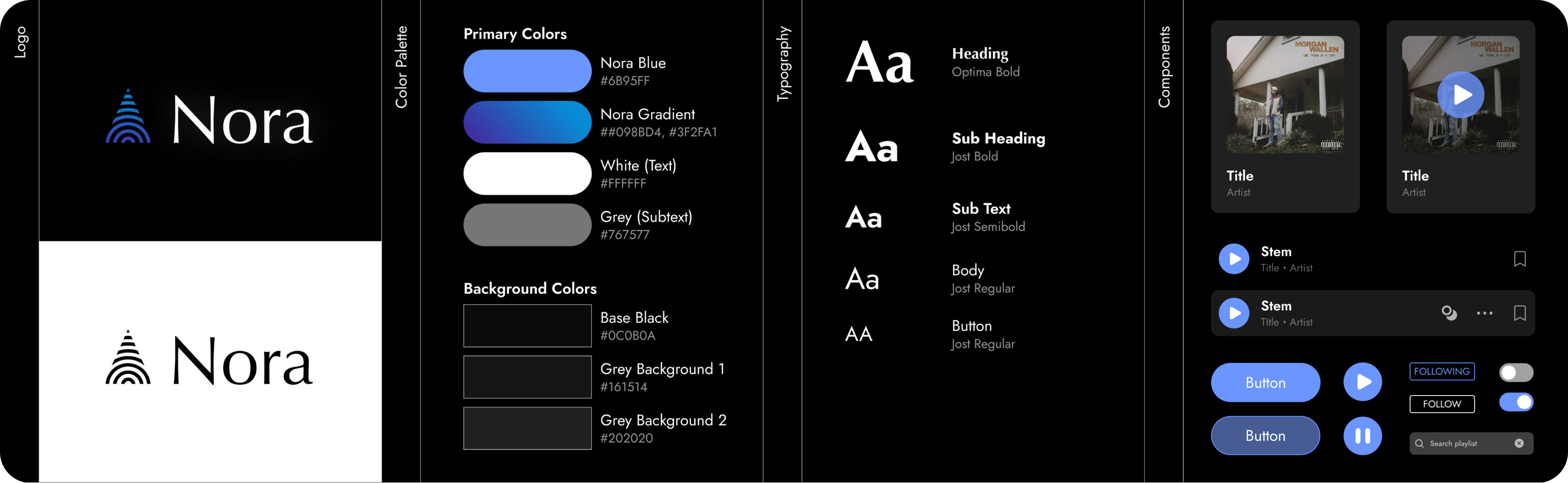
With the visual language established, I built Nora's first design system to bring structure and consistency to a fast-moving product. The style guide codified the brand, while the component library gave the team a shared vocabulary, speeding up iterations and making developer handoffs significantly smoother. In a startup where priorities shift quickly, a well-maintained system meant we could move fast without losing coherence.
Rapid prototyping and iterating based on customer feedback
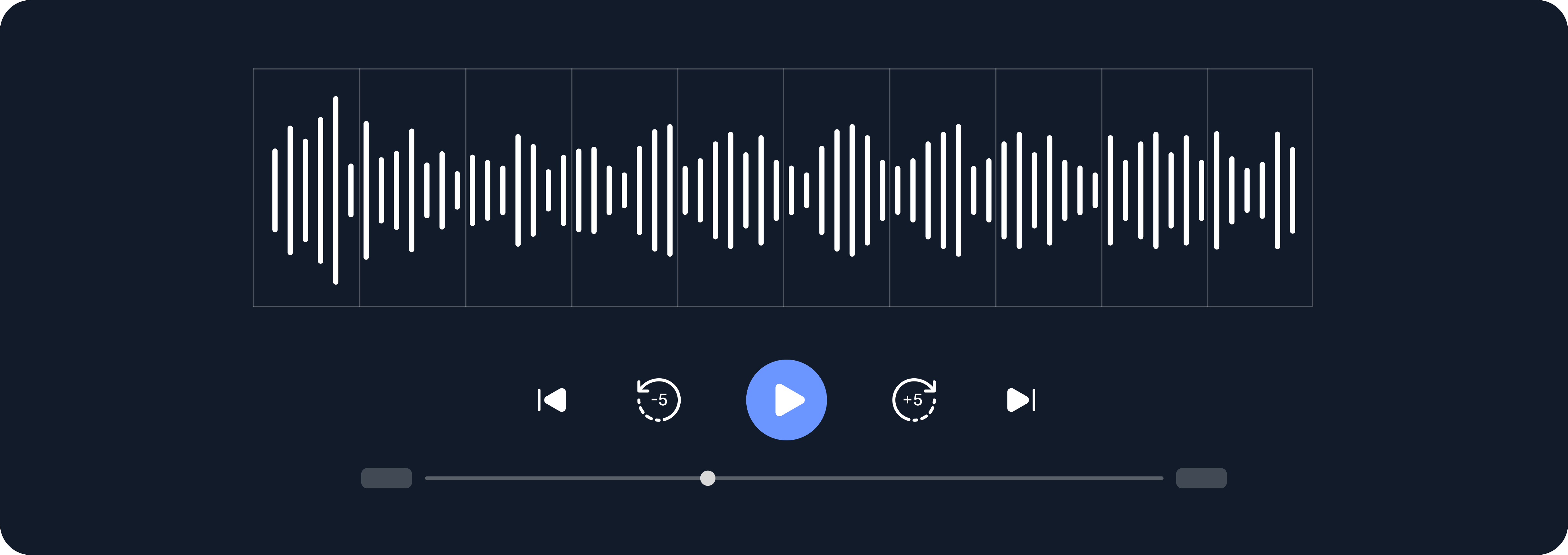
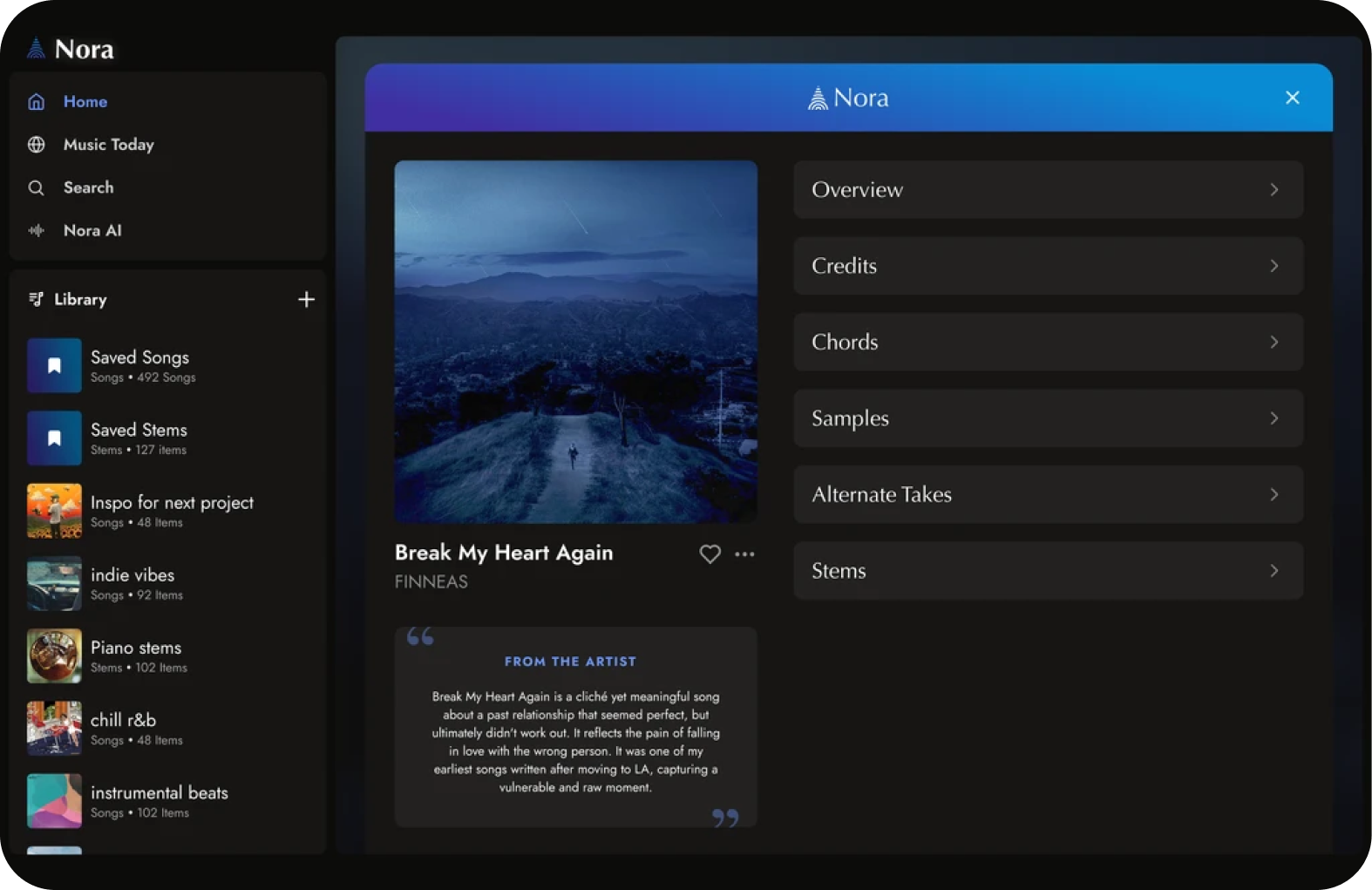
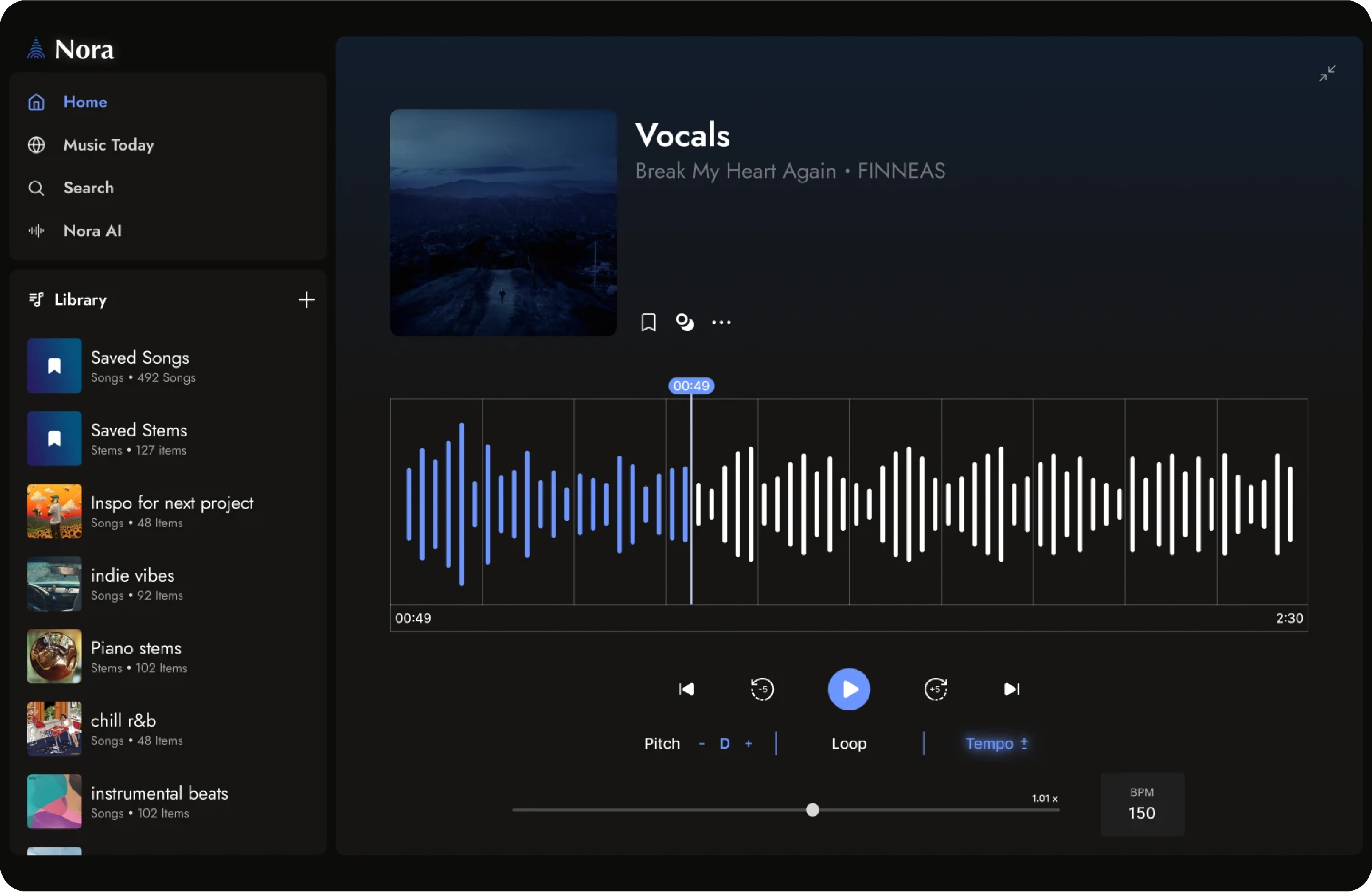
My core contribution was designing and prototyping the full product experience, including Nora Breakdown, which centralizes verified track information like credits, chords, samples, and alternate takes, and the Stem Player, which lets musicians experiment with individual track layers. These high-fidelity prototypes were tested directly with musicians and industry professionals, and their feedback shaped every major iteration. Designing for this audience taught me to ground decisions in how musicians actually work, not just how users generally behave.
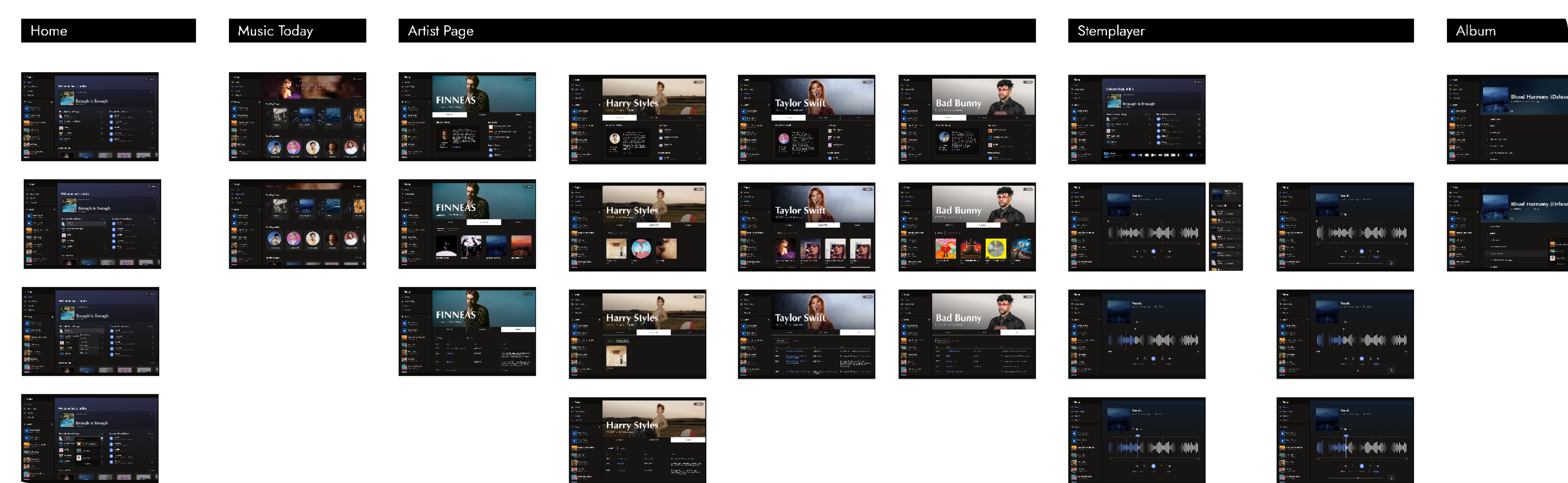
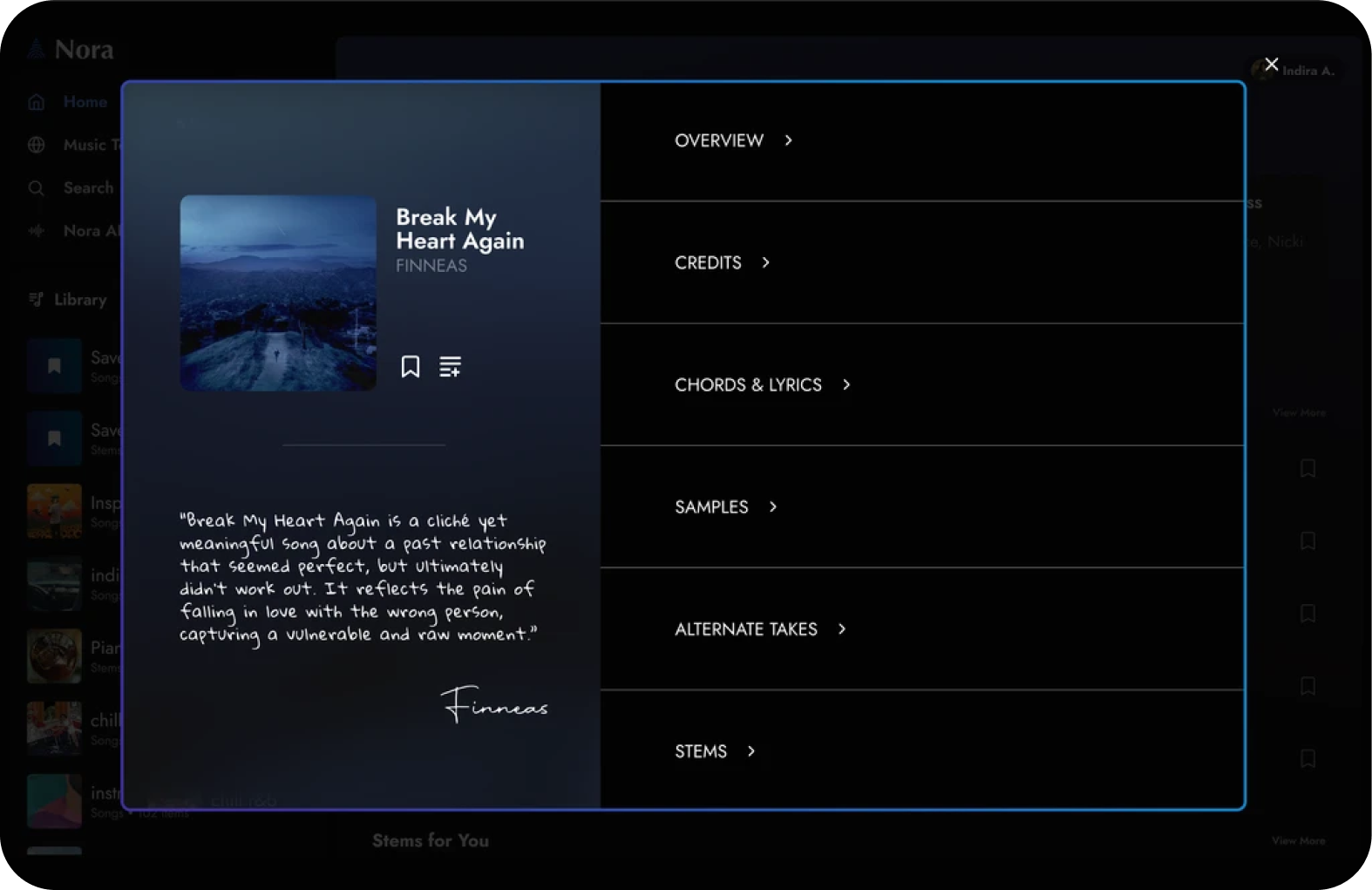
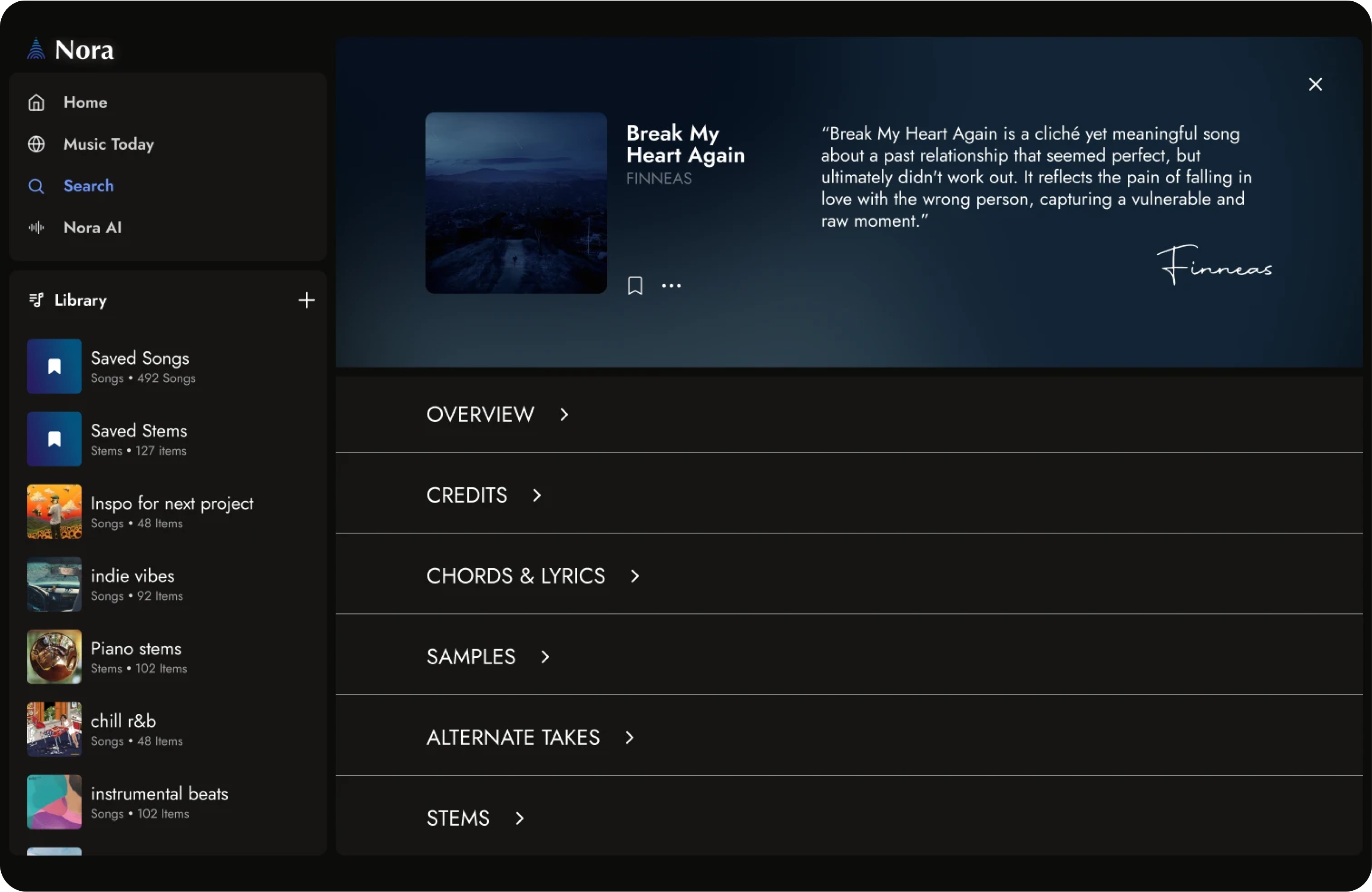
Nora Breakdown went through two rounds of exploration before landing on the shipped design. A side-by-side layout was tested first, but it compressed the detail view and left too little room for the track information musicians actually came for. An overlay approach followed, but it blocked the side navigation, cutting off access to the rest of the app. The final design, shown on the right, gives the breakdown full-screen real estate so musicians can read through credits, chords, samples, and alternate takes without anything competing for space.
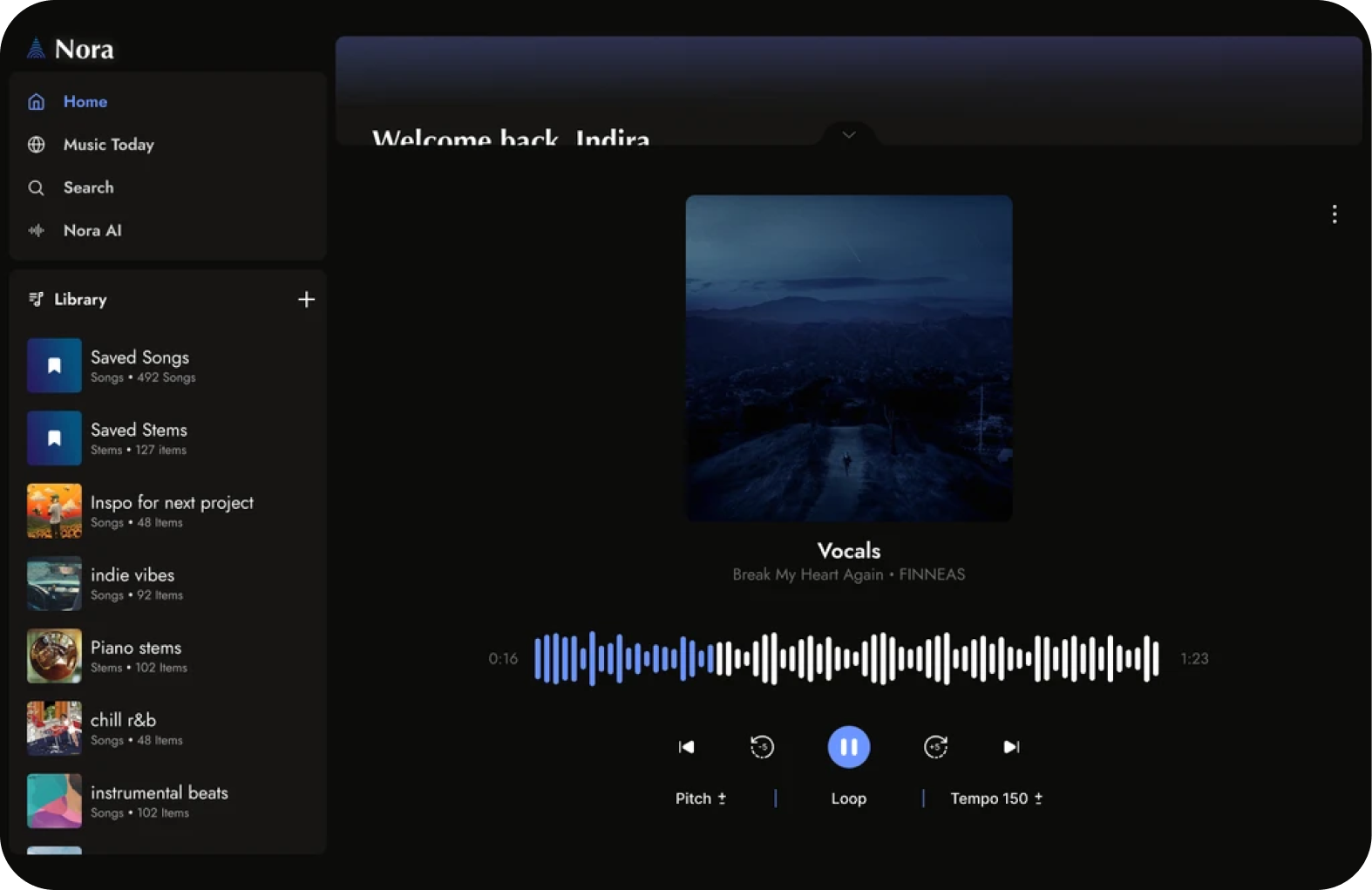
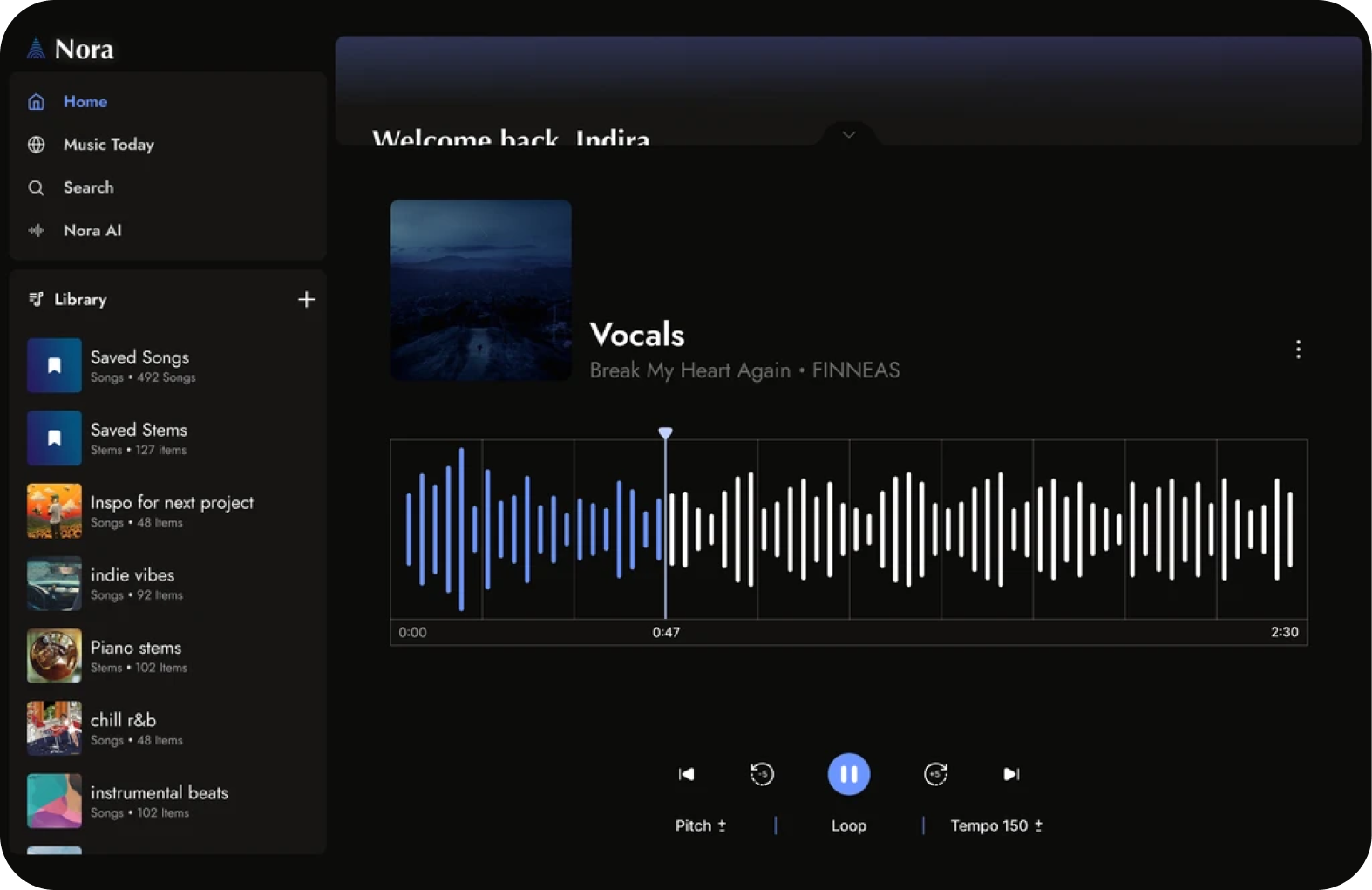
The Stem Player took a similar path. Early designs led with large album artwork, which looked polished but consumed screen space that musicians needed for the editing controls. A pull-up tab mechanic was explored to reclaim that space, but it introduced an accidental-close problem when users were actively engaging with tracks. The shipped design, shown on the right, strips back the decorative elements entirely and puts the editing interface front and center, keeping the focus on the music.
Curating an online presence to drive product visibility
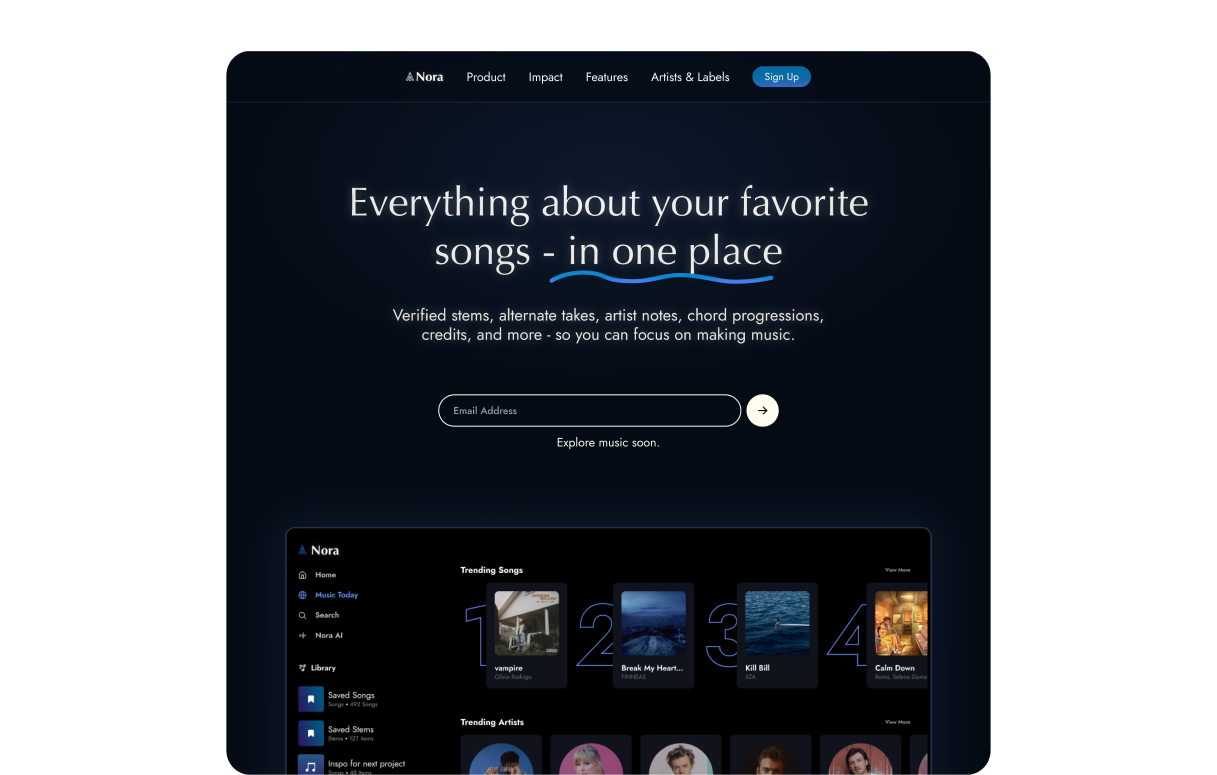
As the only designer, my role extended well beyond the product. I led Nora's marketing efforts, creating the website and visual assets used to build public awareness and pitch to investors. This meant translating the brand we'd built into materials that communicated Nora's value clearly and compellingly to audiences outside the product.
Always ask why
Early on, I treated feedback as instruction, iterating on whatever was asked without questioning it. It didn't take long to realize I was making revisions I didn't believe in. Asking why changed that. It helped me make more informed design decisions and, more often than not, surfaced better solutions than what was originally asked for.
Intentional communication moves things faster
Working remotely with a team spread across the country showed me how quickly things fall apart without deliberate communication. In a startup where direction shifts constantly, staying aligned is active work. I learned to surface progress early, flag blockers before they became problems, and make sure the right people always had the context they needed. It made everything move faster and with less friction.
Know the space you're designing for
I joined Nora knowing nothing about music production, and it showed in my early work. Taking the time to learn the industry, asking producers to walk me through their process, and immersing myself in the terminology made me a more effective designer and built genuine trust with the team. Designing for a specific community requires more than empathy. It requires enough context to know what you don't know.