Sign System
Built a system of two complementary products to support communication for deaf/hard-of-hearing individuals.
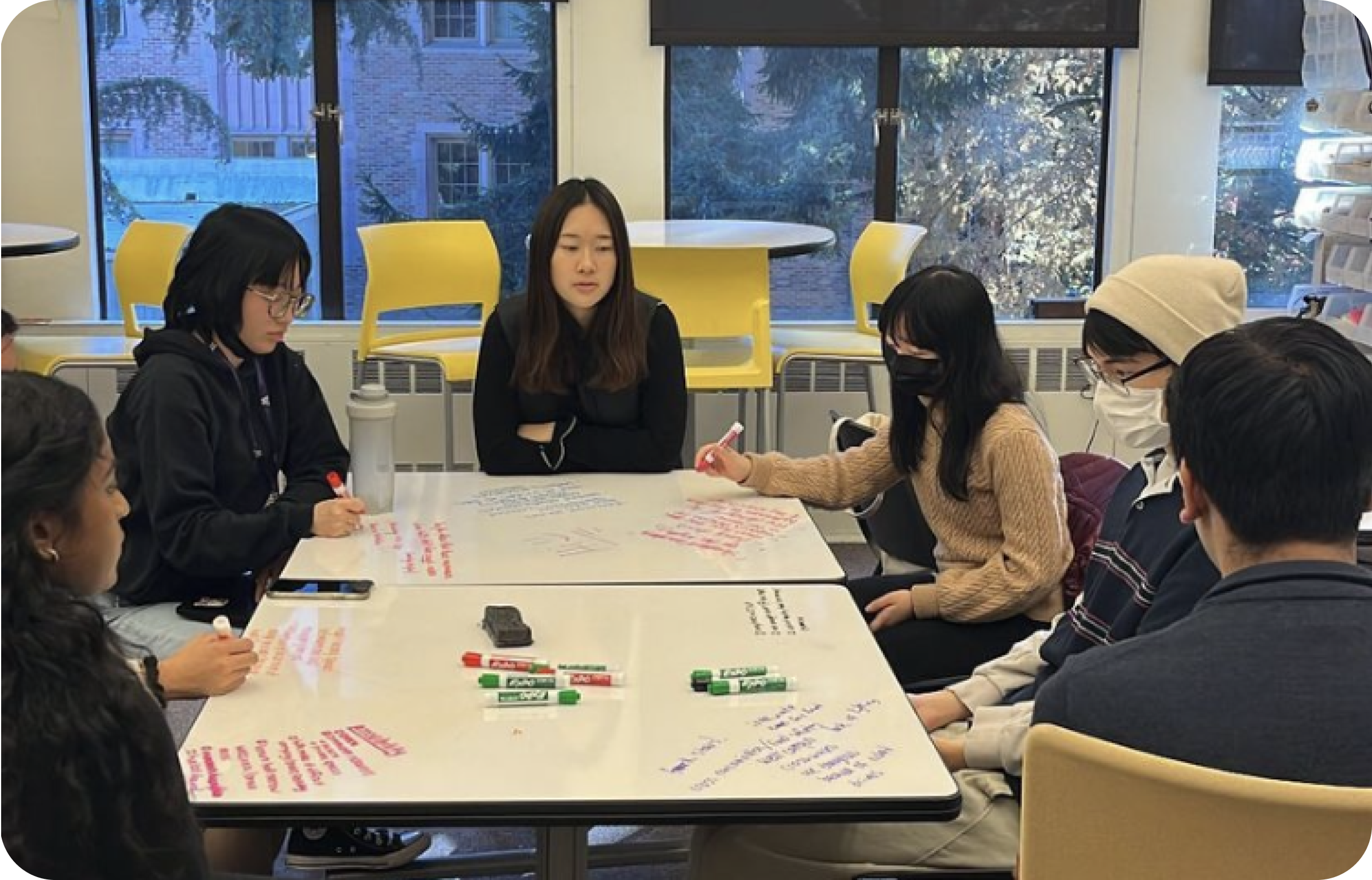
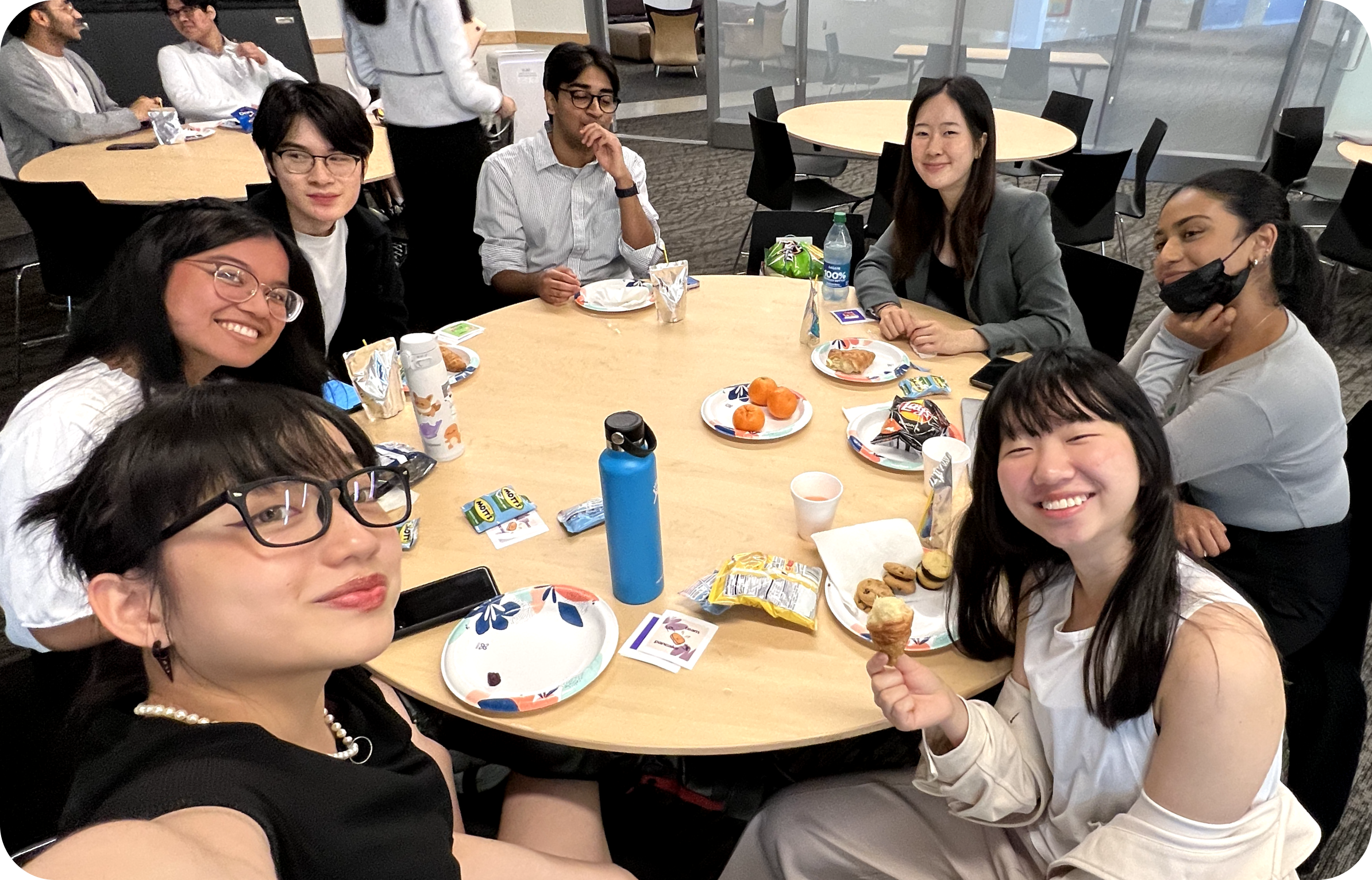
Under the University of Washington's Design for America chapter, our design team of seven explored the existing community, relationships, and technologies around deaf/HoH individuals, discussed with professionals in the field, and ultimately found an opportunity for design to better advocate for accessibility and inclusivity in this space.
Traditional ASL learning is ineffective for language acquisition
Conventional ASL classes often fall short in creating an interactive and memorable learning atmosphere, making it challenging for students to retain what they've learned. Furthermore, these classes may be inaccessible to individuals facing financial constraints or those juggling busy schedules.
A complementary pair of products to encourage ASL learning retention and communication
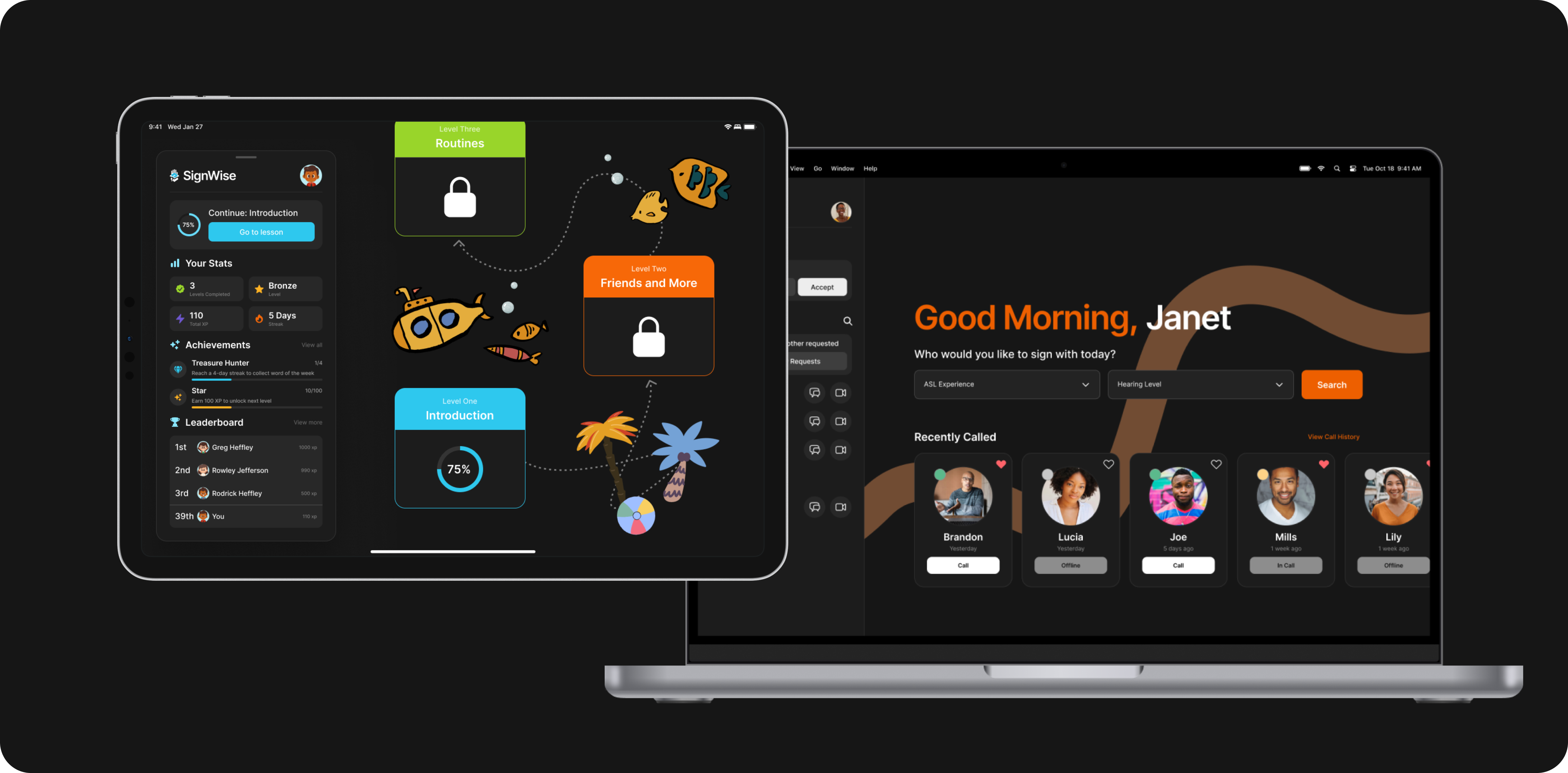
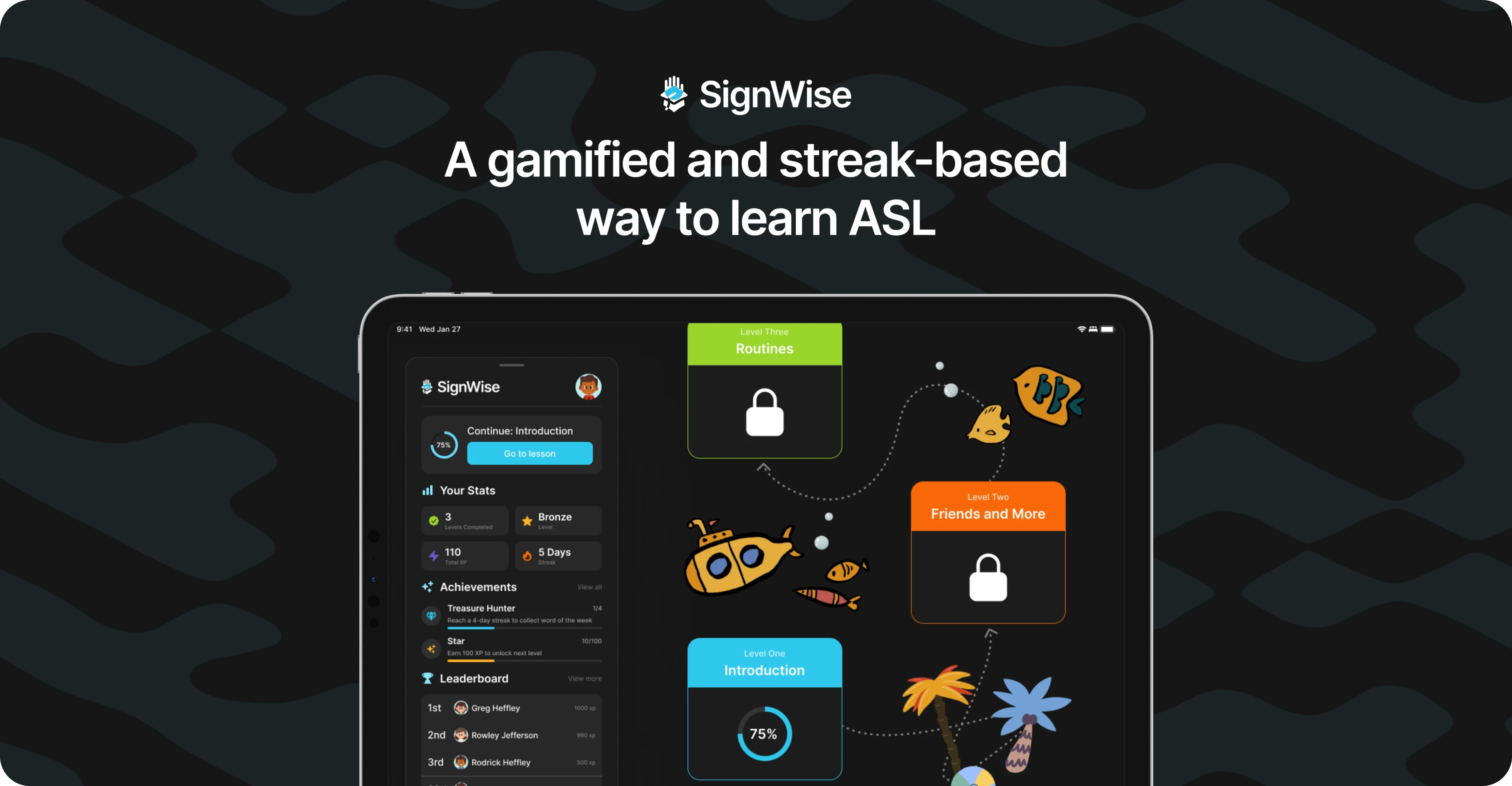
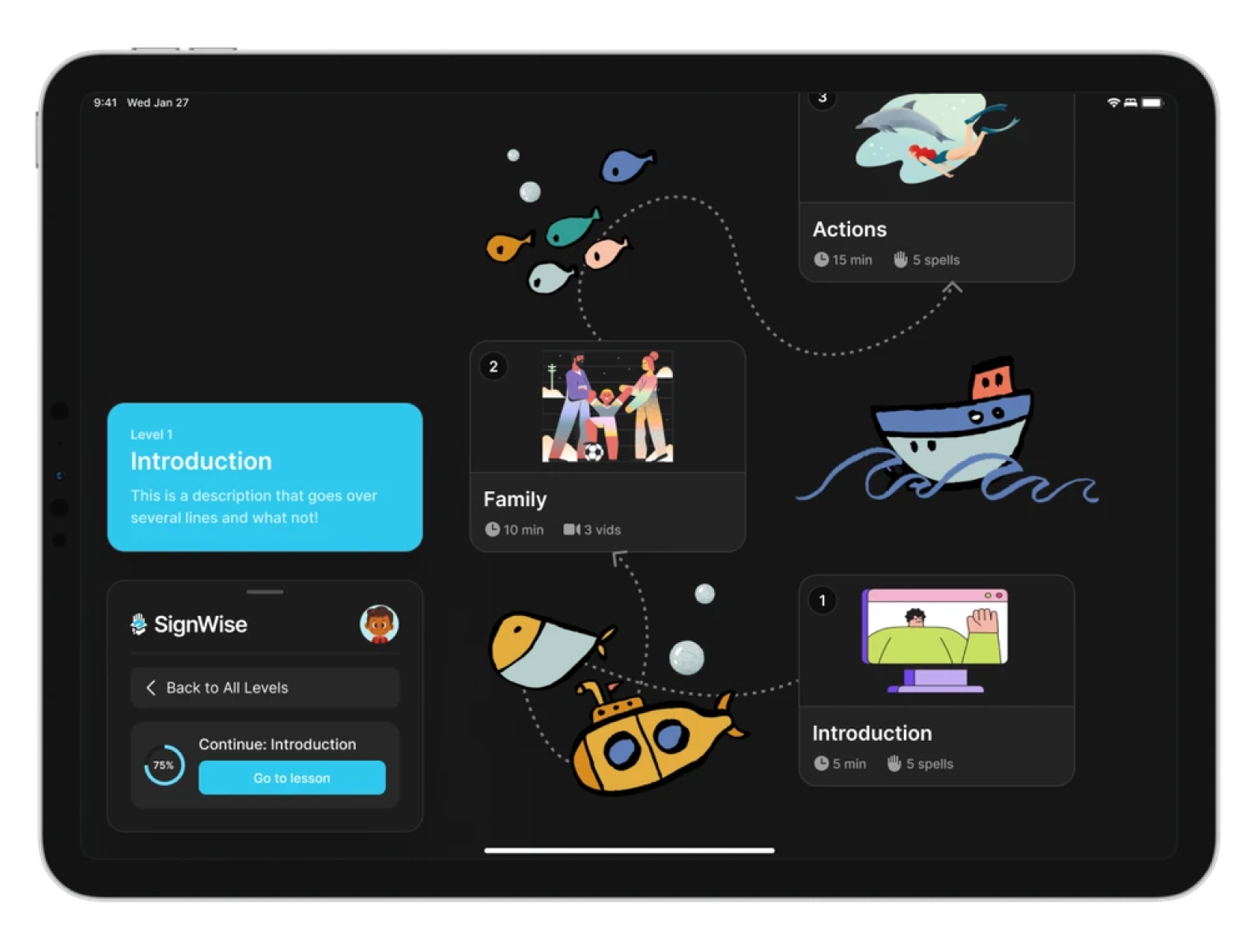
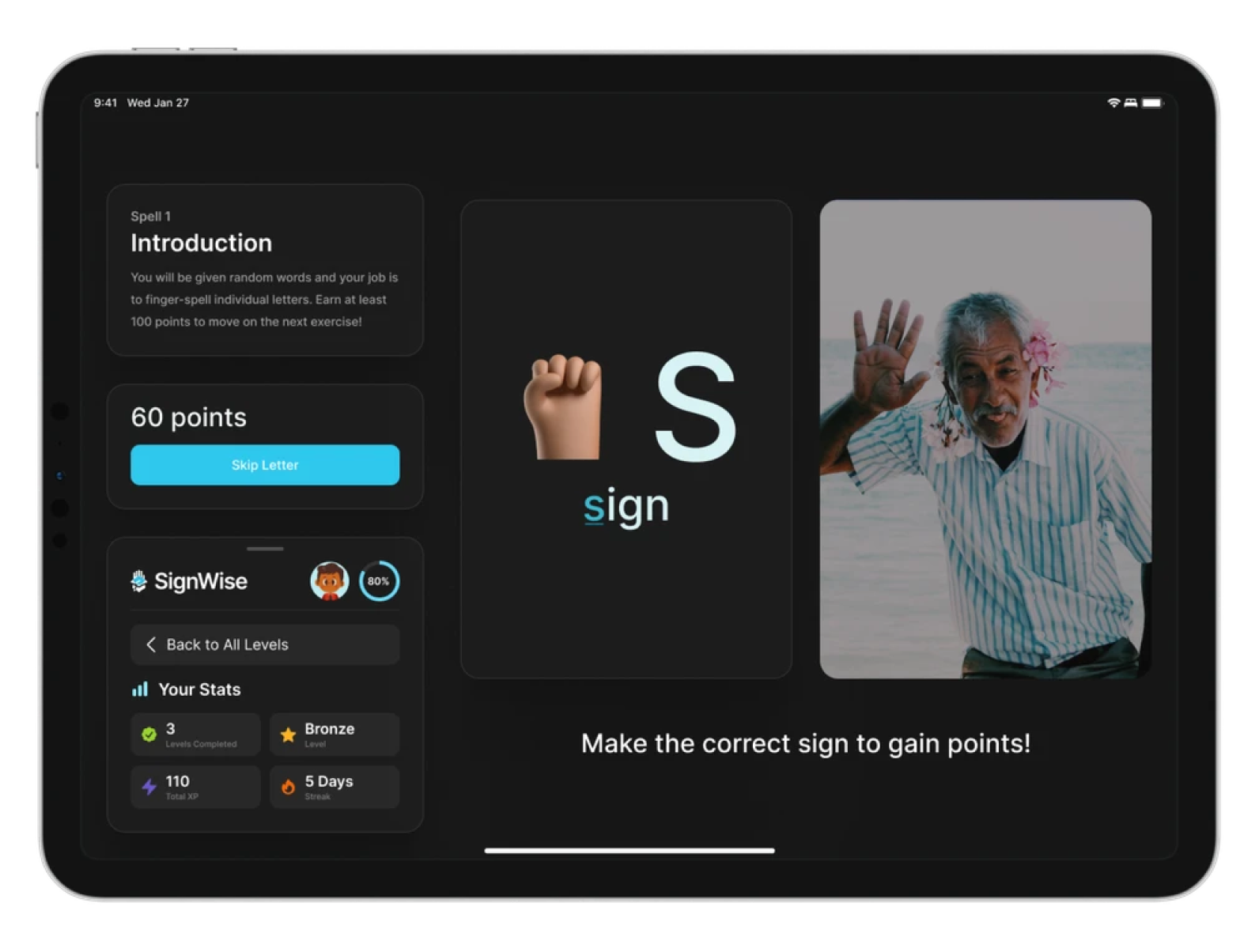
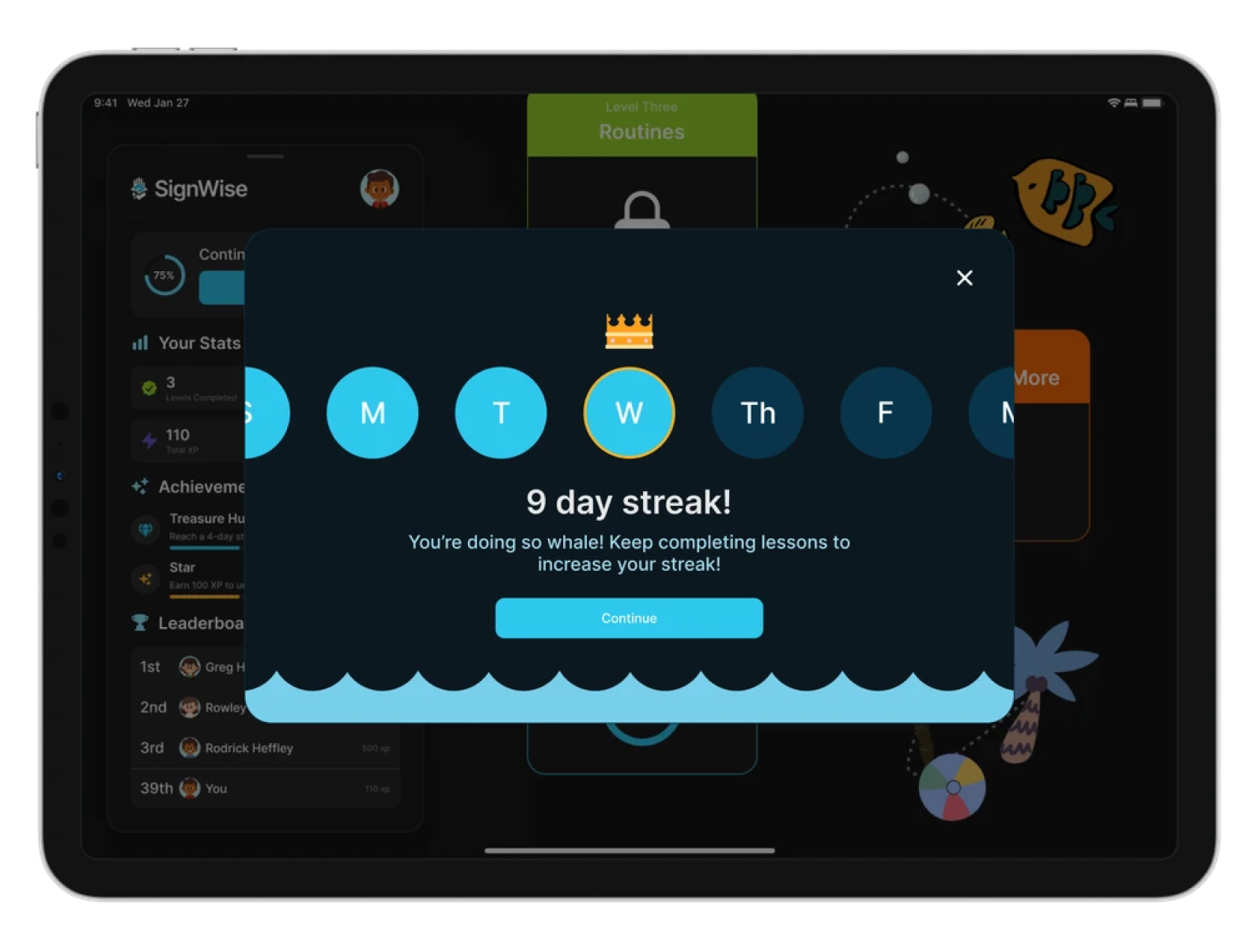
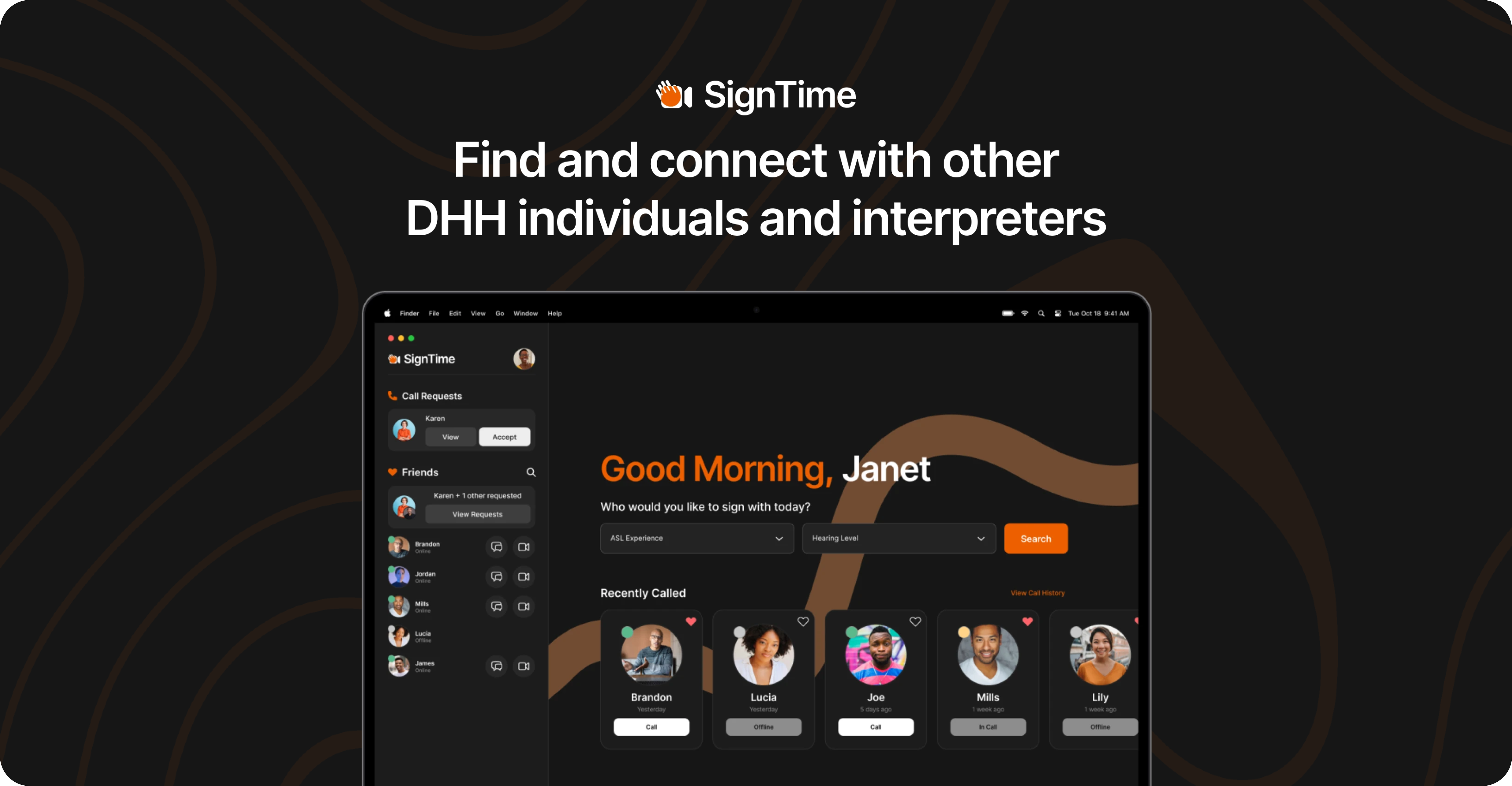
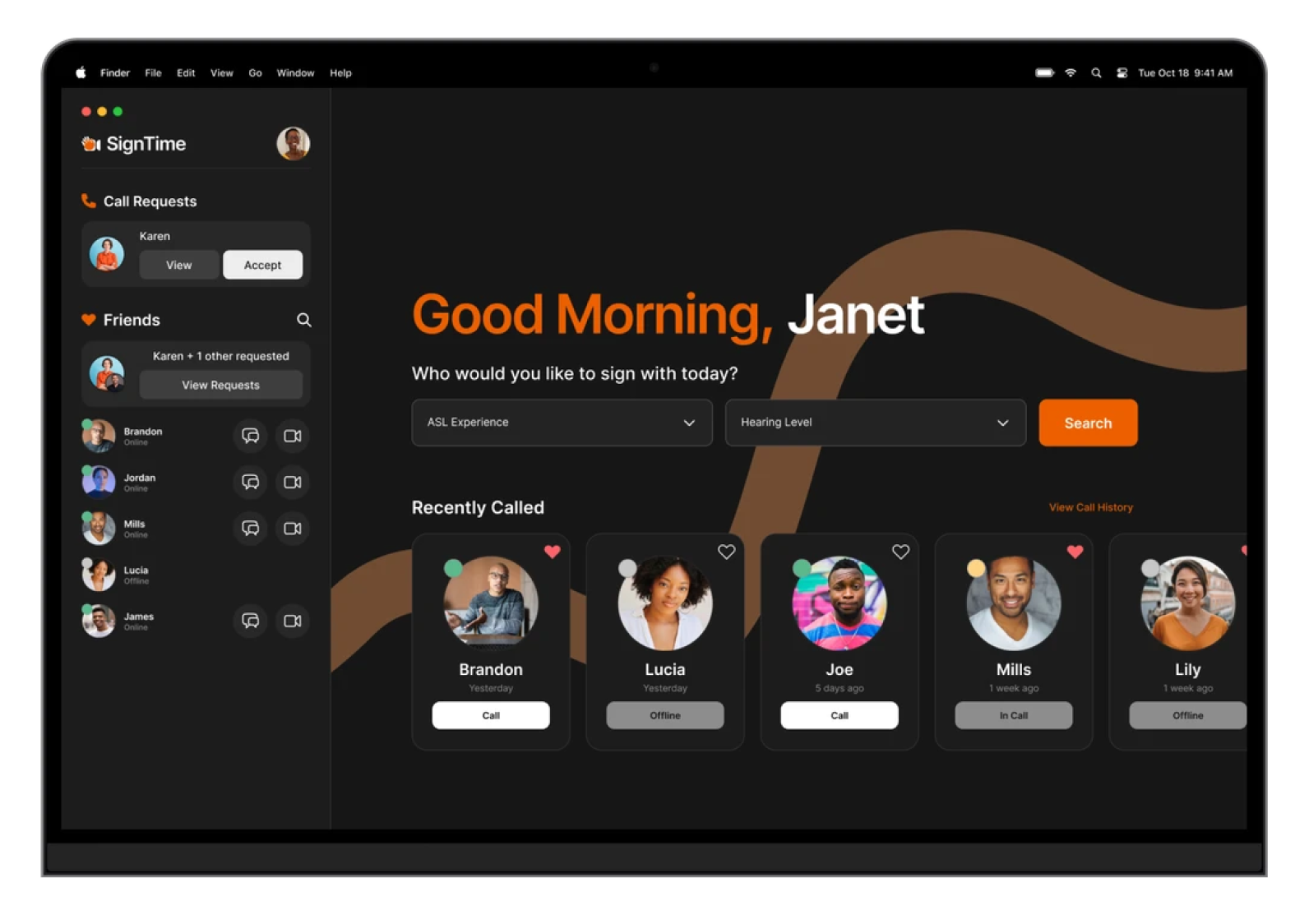
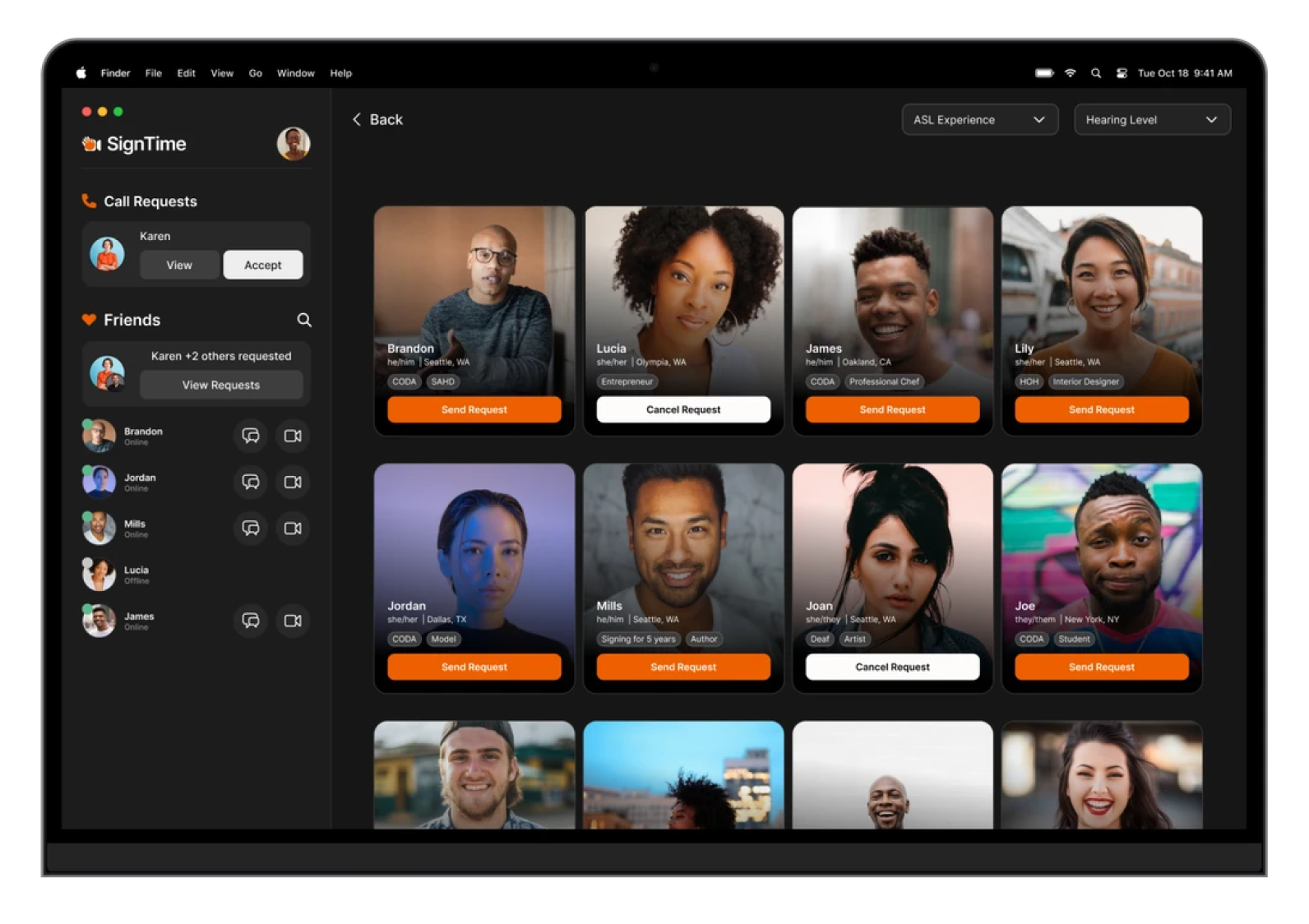
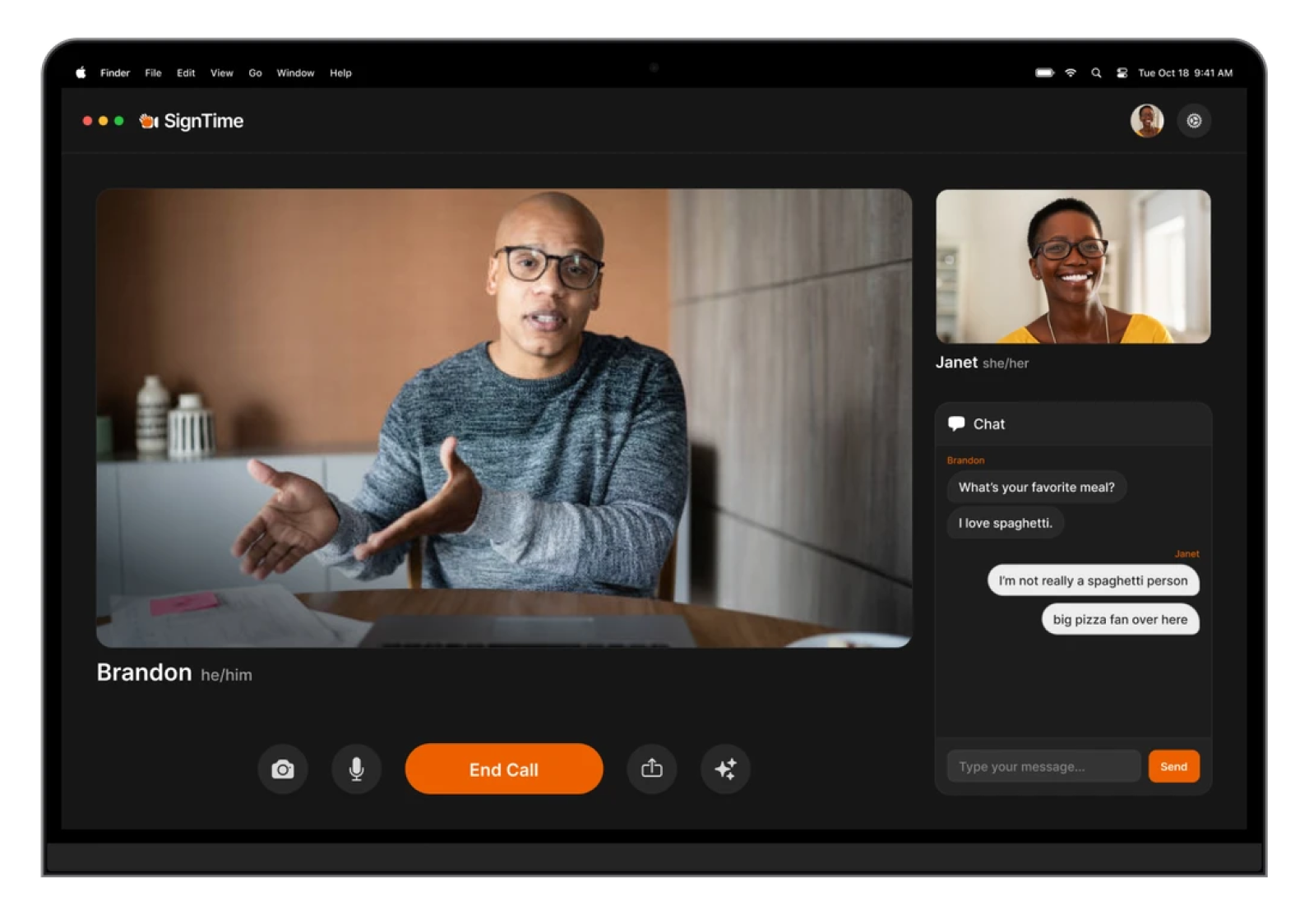
Our solution includes two digital services: SignWise, which gamifies ASL learning and promotes engagement, and SignTime, a platform for applying newly acquired knowledge to foster language retention. This system is designed to assist ASL learners in language acquisition and community building. While they cohesively complement each other, the services can also be used independently of each other to support specific needs.
No one in our team was deaf nor hard-of-hearing
After determining the problem space we wanted to address, we conducted research to better understand the desires and challenges that deaf/HoH individuals faced. This was a critical stage of the process because none of the team members were part of the user group, so learning about that first-hand experience from those who are in or affiliated with the community was critical to making design decisions that truly advocated for their needs.
We surveyed over two dozen individuals who were DHH, or had a close relation to someone who is. From this survey, we wanted to gain an understanding of what the current trends were in ASL learning, and what benefits and barriers come with them.
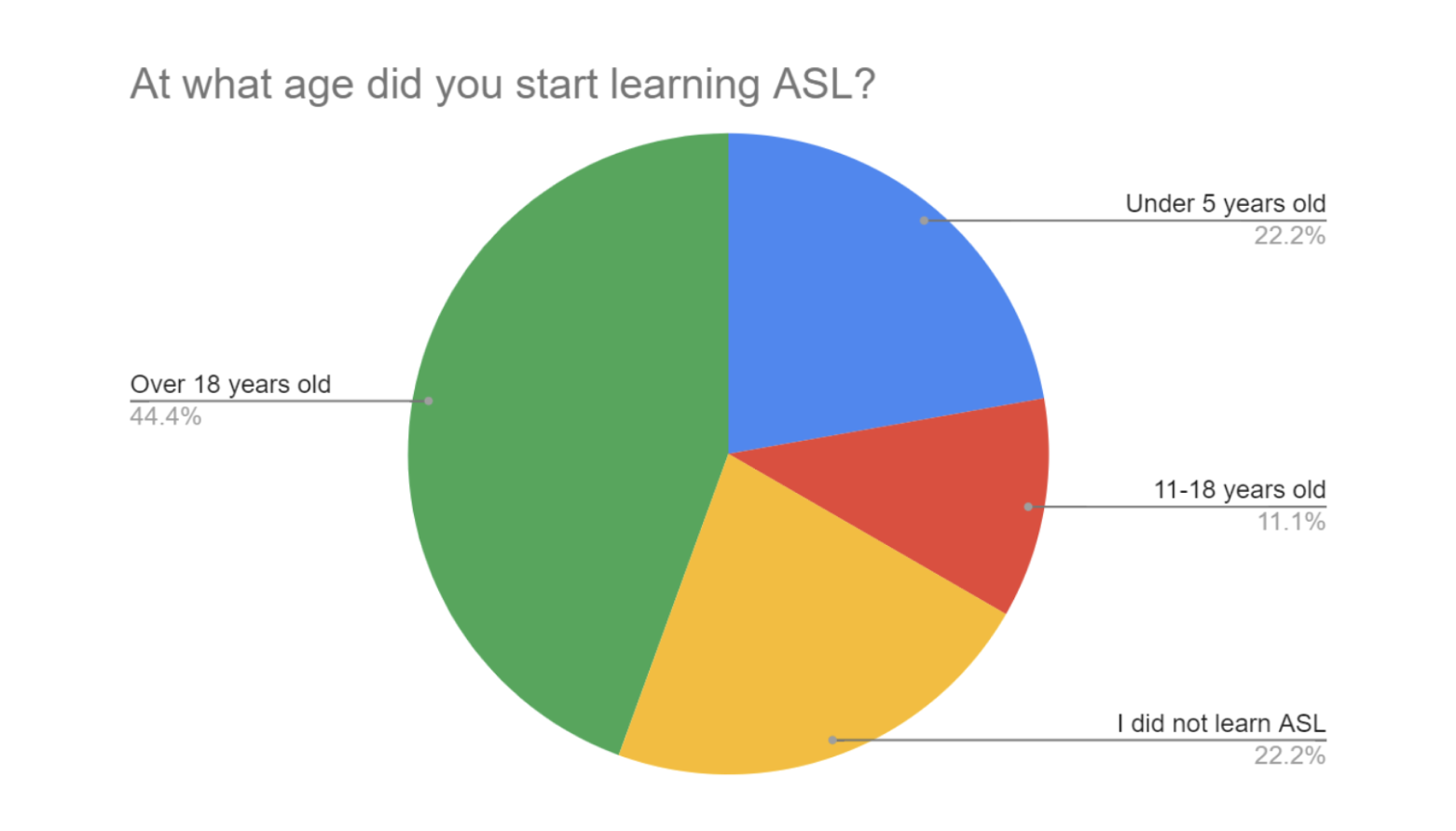
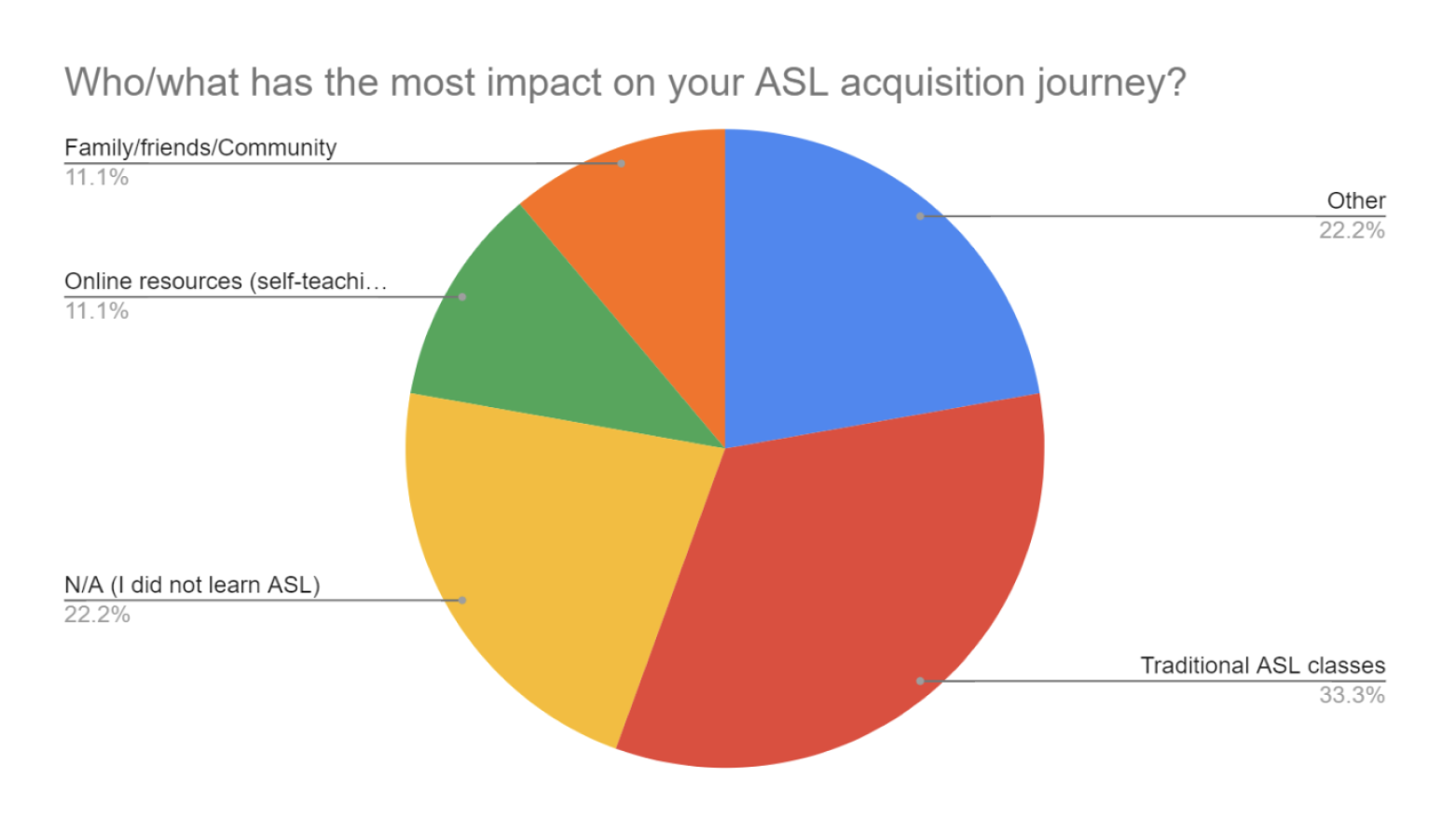
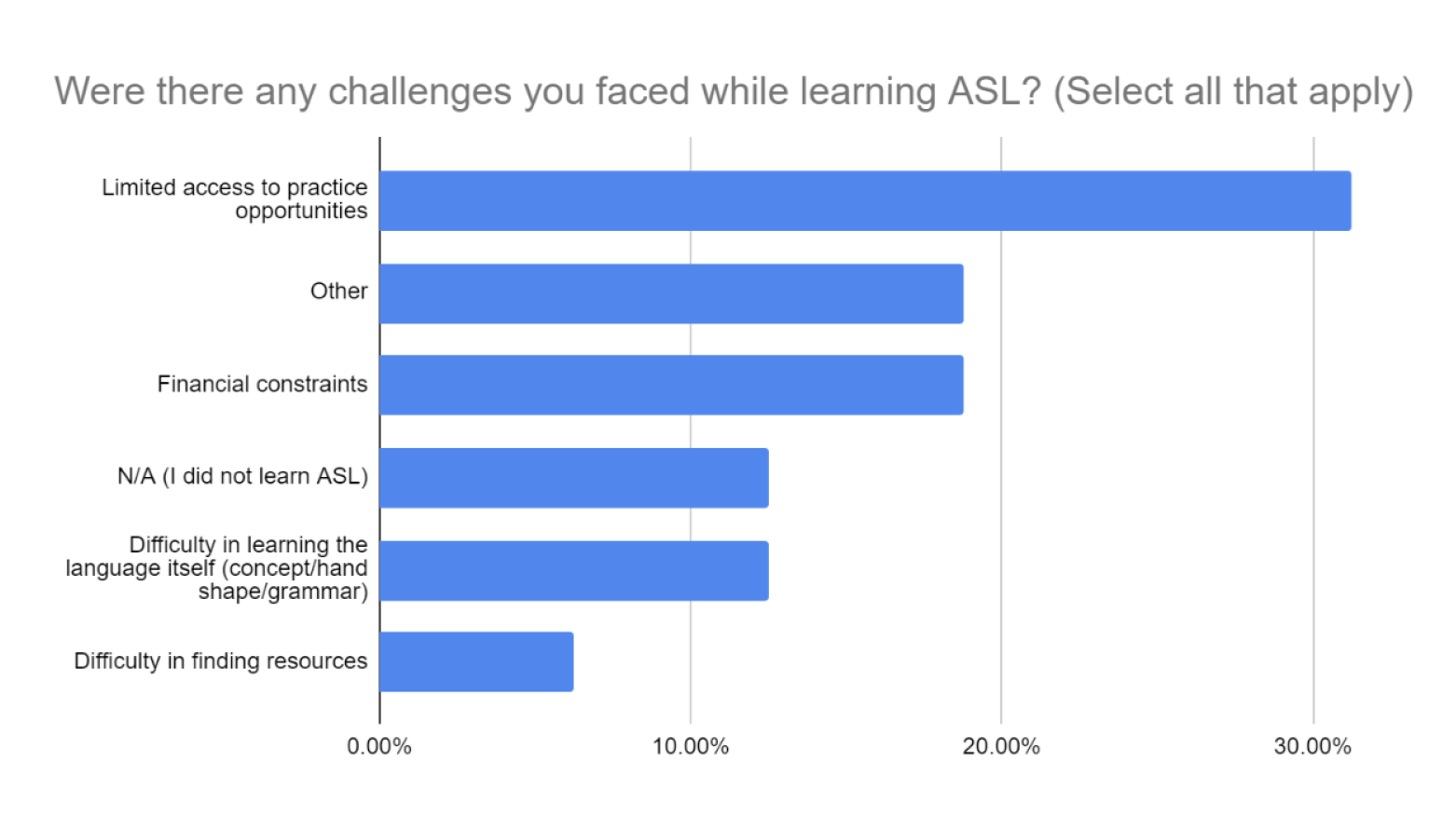
In addition to surveys, we also reached out to many professionals in the field to learn about existing technologies and services for DHH individuals. Three knowledgeable experts engaged with us and provided meaningful insight on how we could approach addressing the problem space with accessibility and inclusion in mind.
In-person classes challenge retention
Most classes are usually offered on a weekly or bi-weekly basis, and this frequency makes it extremely challenging to retain knowledge due to the lack of practice opportunities between class periods.
Traditional learning resources can be inaccessible
Many traditional ASL classes are not offered in rural areas, making it inaccessible to a large population of ASL learners. For private lessons, customers often face financial barriers.
Classes do not equal community
Many ASL learners shared a common struggle: finding a sense of belonging and building community with other learners proved difficult.
How might we improve ASL acquisition and communication for deaf/hard-of-hearing (DHH) individuals and their surrounding ecosystems?
Brainstorming out of the box solutions
As a team, we brainstormed all the ideas we could possibly think of to address the issues uncovered during research. Our research identified two main areas that we could design for: ASL learning and ASL communication.
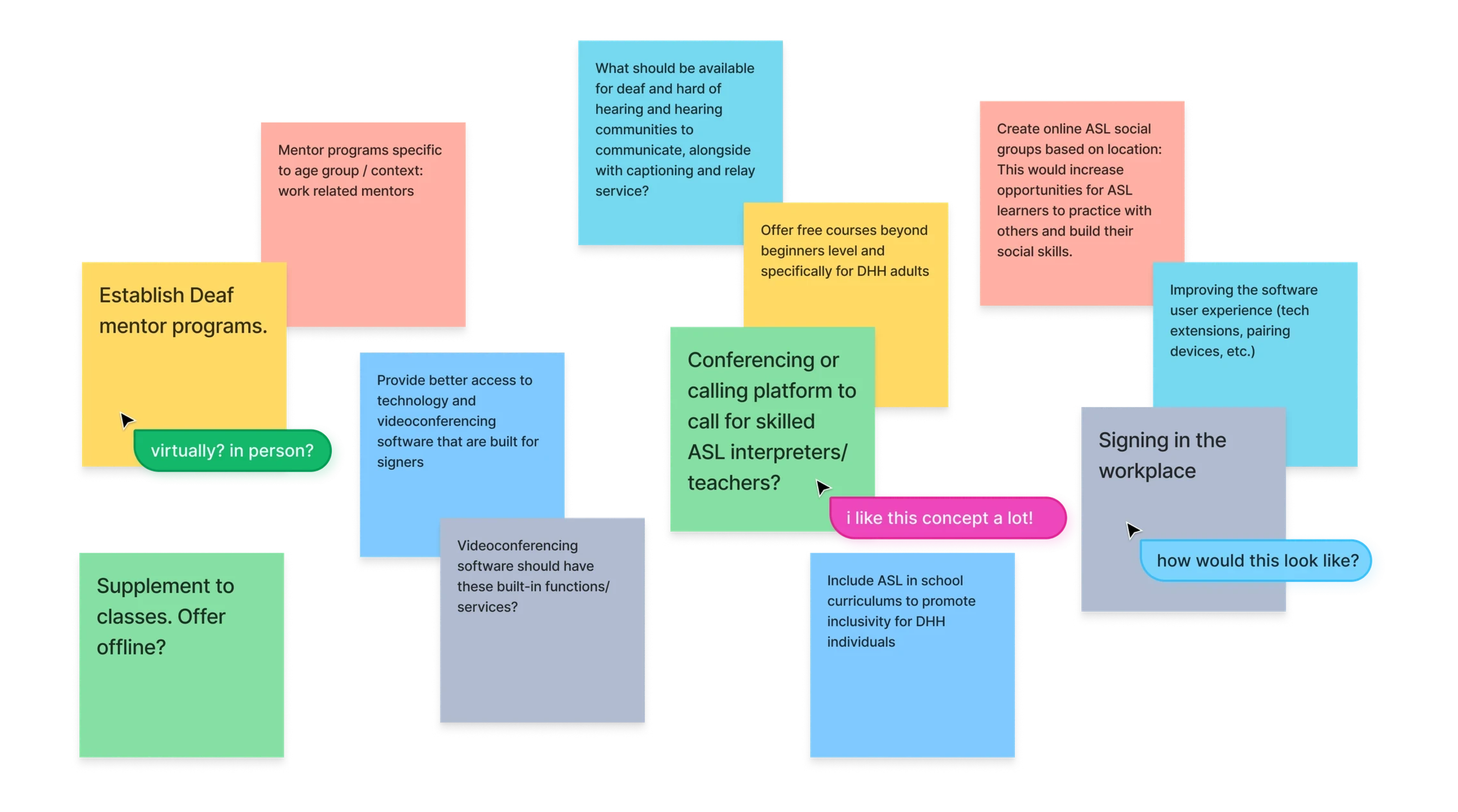
Everything starts at the drawing board
With every idea we had, we turned them into tangible sketches that could be shared amongst each other and with our stakeholders for feedback. Rather than focusing on creating pixel-perfect prototypes, we embraced the messiness of sketching in order to create rapid models of our ideas.
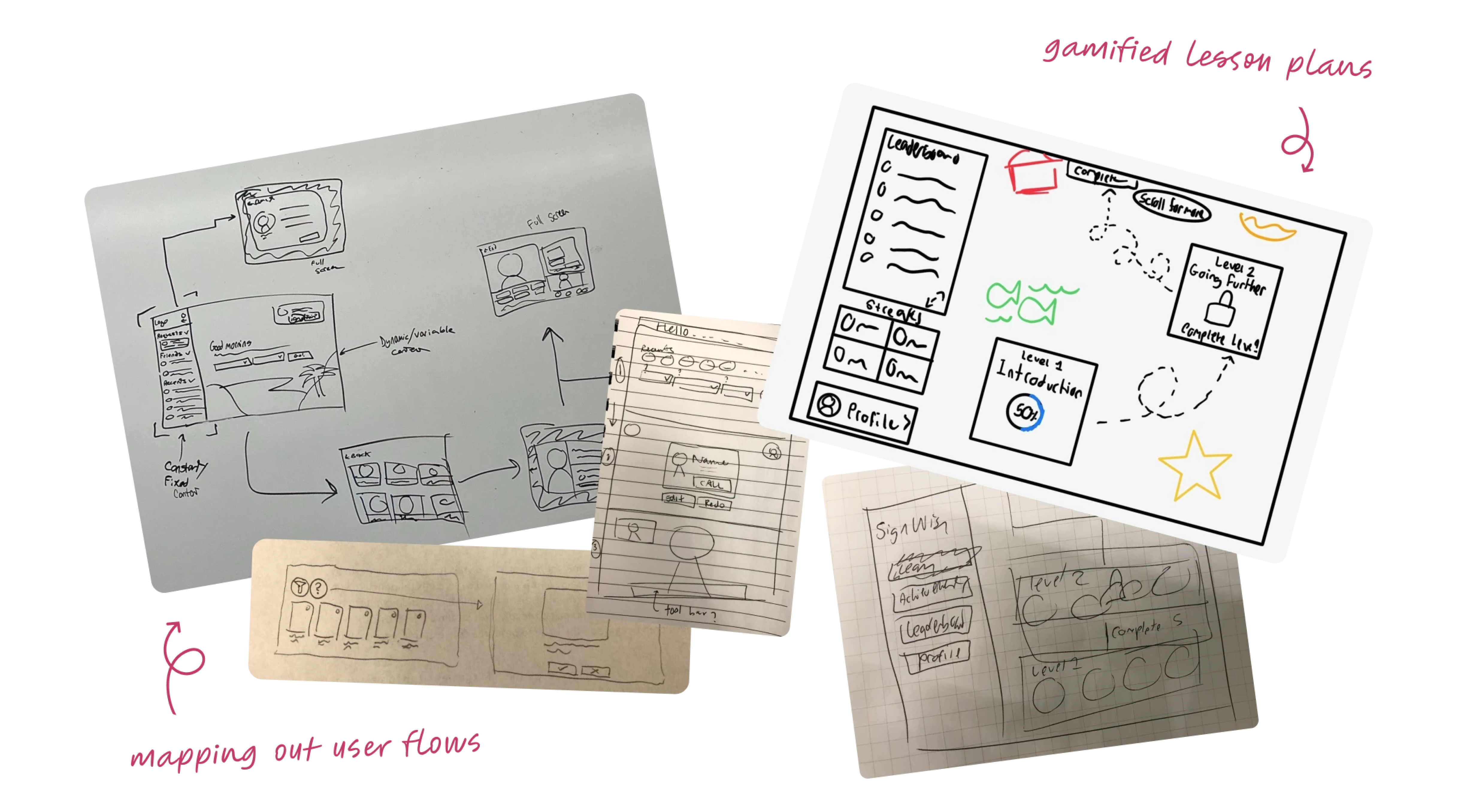
We continuously refined our initial sketches based on user feedback and testing, exploring different approaches to ensure the final design was both intuitive and impactful for ASL learners. Each iteration brought us closer to a solution that truly addressed user needs.
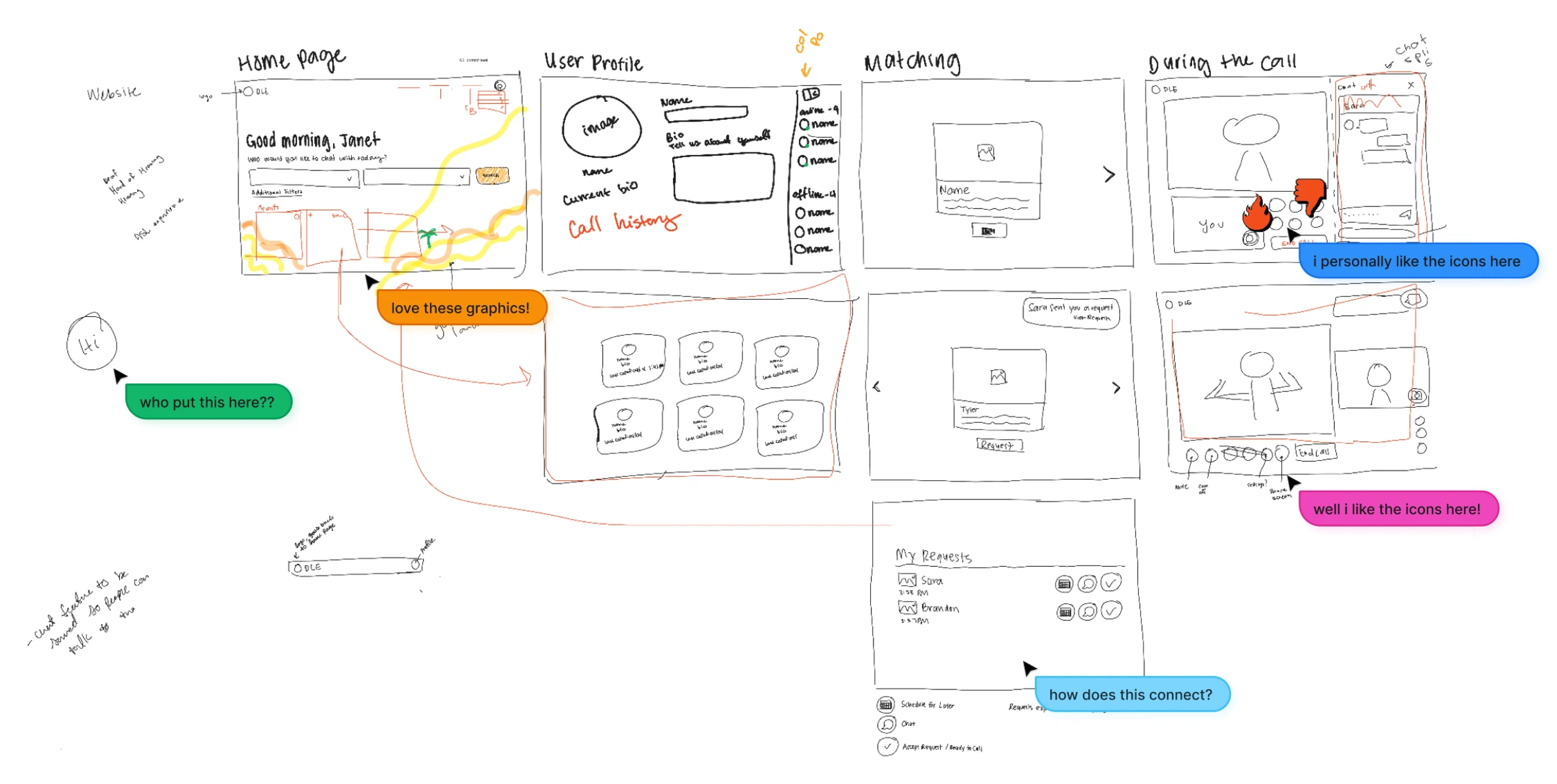
Killing two birds with... two stones
Sign System consists of SignWise and SignTime, a dynamic duo that aims to bridge the connection and communication between deaf/hard-of-hearing (DHH) individuals and their surrounding ecosystem.
Keep users involved at every stage of the design process
Designing for a community our team had no lived experience in made ongoing user engagement non-negotiable. The initial research gave us a foundation, but the real insights surfaced through follow-up conversations we almost didn't have. Staying curious and asking one more question often uncovered the thing that reshaped our thinking.
Push back with purpose
I learned to challenge decisions not just when something felt wrong, but when I could articulate why. Advocating for SignTime as a web-first experience rather than mobile, after walking through the limitations smaller screens posed for ASL users, led to a stronger outcome than if I'd stayed quiet. Design confidence isn't about being right. It's about being clear.
Sometimes the right answer is two answers
Building Sign System as two distinct products rather than one catch-all service let us stay focused on what each one needed to do well. A single product trying to serve both learning and communication would have diluted both. Embracing that constraint made the design sharper and the user experience clearer for each audience.